Log in



It's rare that I'll open up a preview about a game by saying "hear me out", but in the case of Stars Reach, it's appropriate. I will readily admit, upon a cursory glance of Stars Reach's Steam page, that my inner cynic (who I try not to pay too much attention to) had written it off as a bog-standard, boilerplate survival game with MMO elements.
I'm not here to tell you that Stars Reach will knock your socks off—it is a deeply ambitious thing that might burn up in atmosphere—but it's certainly far more interesting than its trailers give it credit for. And that's not even to knock the people who made them. It's a difficult game to describe, one that's trying to spin a lot of plates at once, and revive a genre of MMO that's fallen by the wayside.
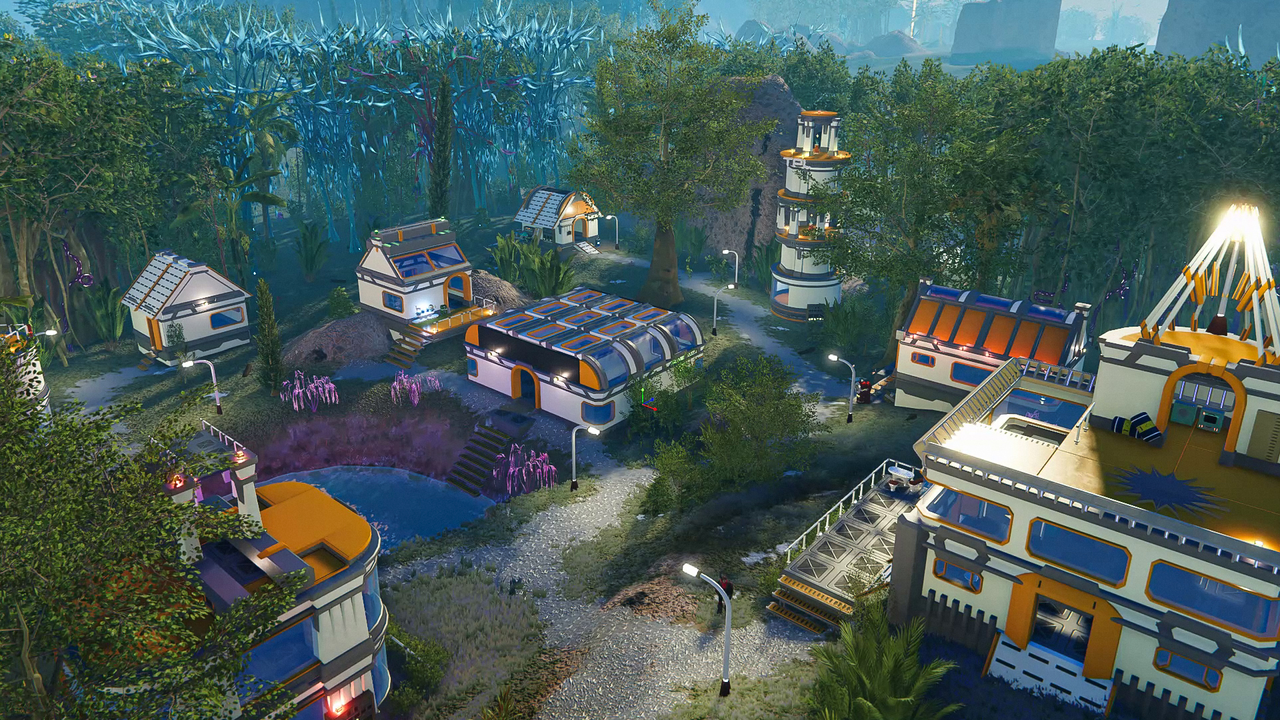
I recently had the pleasure of interviewing its creator, Raph Koster (who worked on Ultima Online and Star Wars Galaxies)—he described it to me as a blend of SWG, RuneScape, Eve, and Ultima Online. The makeup of Stars Reach is a web of procedurally-generated planets that players can lay claim to and establish rules over.
The vision being that said players get to decide what a planet is—in theory, you could have a PvP-enabled planet that's an absolute warzone, or a PvE-only trade hub city—all connected by wormholes that open and close as needed:
"In our case, our galactic map is not a static map of zones," Koster explains. "Zones can be created on the fly, generating whole new planets, new space areas. Wormholes can be created that open up new territories to go explore and mine out and adventure and kill. And if you stop going to one, the wormhole needs traffic that needs to get transited to stay stable. Our map will lose the link, and we will throw the zone away."
Terra Forma
As for what that boots-on-the-ground experience looks like, there's a lot of simulation going on that'll make survival enthusiasts pleased, true, but it's really in service of that sandbox MMO feel: "There are hundreds of different materials in the game. They have different hardnesses, different statistics, different properties, and they act in realistic ways."
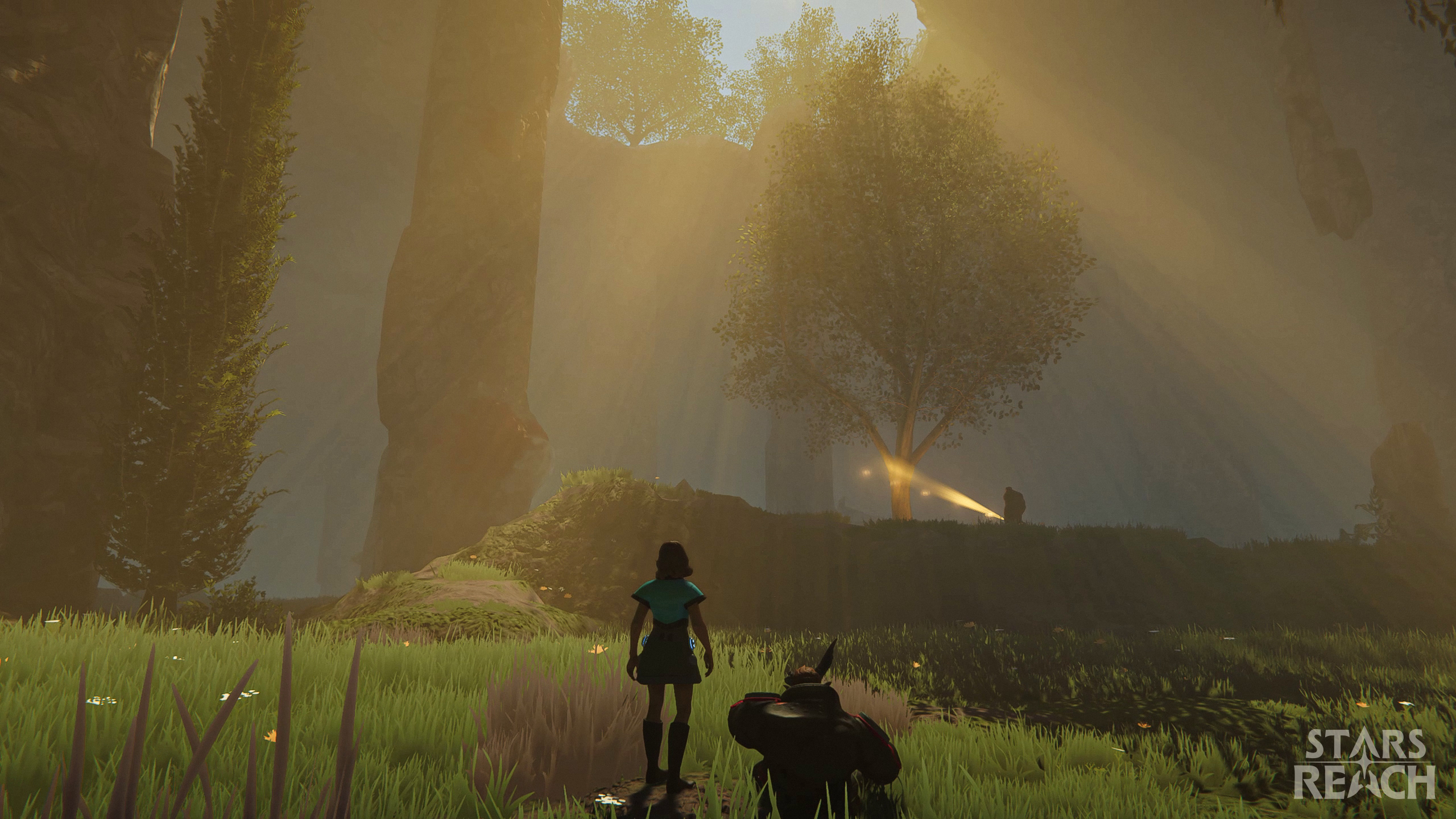
Koster and his team give me a couple demonstrations, heating rock up to melt it into lava: "We can even use the chrono phaser tool to erode that rock into dirt, we could erode marble into limestone, and then into chalk, and then from chalk into sand, and then we could heat up that sand, and it would be left behind as a patch of glass."
Later in the demo, Koster also carves out a channel for a lake to drain, and surely enough, it starts to erode the rock it paths through as it pours into a valley. Koster is effusive about this stuff to a degree which has that inner skeptic rattling its saber again, but I did absolutely see live examples that seemed, at least in a limited capacity, to be working in the way he said they would.
What gets me actually excited about Stars Reach, however, is the profession system. If you've played Star Wars Galaxies back in its pre-NGE heyday, or OldSchool Runescape, or even Project Gorgon—think of that. A range of potential XP tracks that span the gauntlet from useful (combat and weapons skill trees) to hyper-specific (journalism—more on that in a second).
"You have over 40 different professions, you earn XP in each of them separately. So, if you want to play combat, you fight, you get combat XP, you spend it on combat skills. There's over 1,000 skills here, with more coming all the time," Koster explains—your character can multi-class into four professions at any given time, but can level up all of them independently.
"Many of them are familiar, like crafting or cooking or whatever, but many of them aren't. Botany and xenobiology are essentially embedded mini-games of Pokémon. Leadership is a skill track, explicitly for pro-social behavior, for the kinds of players who found guilds, engage in the politics of running planets, you earn XP in that by doing things like rescuing people under fire or leading groups.
Players have practically invented steam power. They have invented subways and elevators. They have built entire cities, formed governments."
Raph Koster, CEO of Playable Worlds, Inc.
"The humanities line there is actually explicitly for roleplayers … there's a journalist track, an in-game news net that allows you to post in-game articles or links to your videos, players can look at that stuff in-game, give you likes, you earn XP, you can charge money for it, and that then can result in you earning things like drone cameras."
The thing that really gives me hope are the things that Koster says players are already doing with this sandbox-level freedom—for example, one of playtesters' largest guilds is an animal conservation union: "They actually try to preserve all of the different species of animals and plants, because if you choose to pave this place over, you can actually drive the creatures extinct. That species will never appear again in the game."
Koster also says that "players have practically invented steam power. They have invented subways and elevators. They have built entire cities, formed governments. They have zoned public lands to build zoos, public parks, community gardens. They have astonished us, frankly, with their creativity. They've been making music videos about their cities."
I don't know if Stars Reach will fully deliver on everything Koster wants it to—but I honestly think it deserves a fair shake, given how dry and formulaic the MMO genre has become. I've nothing against themepark MMOs with glossy raids and pre-planned encounters, but as my time with Project: Gorgon taught me, I think there's a deeply unaddressed market for that oldschool MMO vibe.
There hasn't been a modern, non-niche version of that, and whether Stars Reach pulls it off or not, I'm just glad that someone's giving it a go. Stars Reach intends to launch into early access sometime this summer.
Best MMOs: Most massive
Best strategy games: Number crunching
Best open world games: Unlimited exploration
Best survival games: Live craft love
Best horror games: Fight or flight