I'm a gamer. I grew up in and around one of the best cities anywhere, Austin, Tx. Head down if you like live music or games!
143435 stories
·
8 followers

I wish Bungie would stop designing excellent multiplayer shooters and go back to making fantasy strategy games where you blow up zombies with dwarf bombs

1 Share
Weird Weekend

Weird Weekend is our regular Saturday feature where we celebrate PC gaming oddities: peculiar games, strange bits of trivia, forgotten history. Pop back every weekend to find out what Jeremy, Josh and Rick have become obsessed with this time, whether it's the canon height of Thief's Garrett or that time someone in the Vatican pirated Football Manager.

As you've probably heard multiple times by now, Marathon is a thoroughly excellent game. Bungie brings all its FPS experience to bear on the inexplicably popular extraction shooter genre, delivering a game that lures you in with its unique aesthetic and then socks you in the jaw with nuanced class-based combat. It has fantastic shooting, an intriguing story and, as you delve deeper into the game, some outstanding map designs.

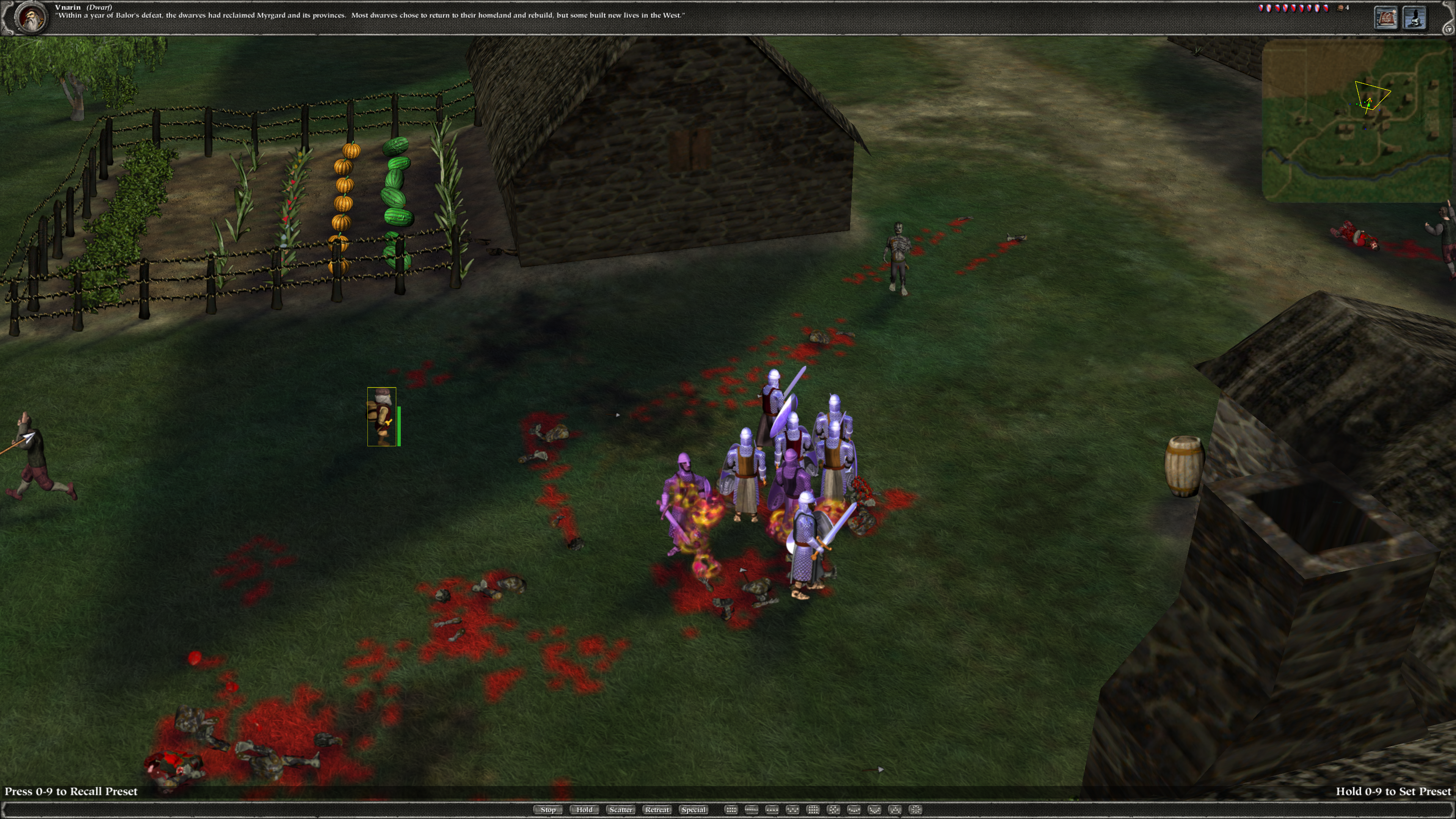
In short, I like Marathon a lot. But I would trade it instantly for another game about grouchy dwarves blowing up zombies with Molotov cocktails.
(Image credit: Take Two)

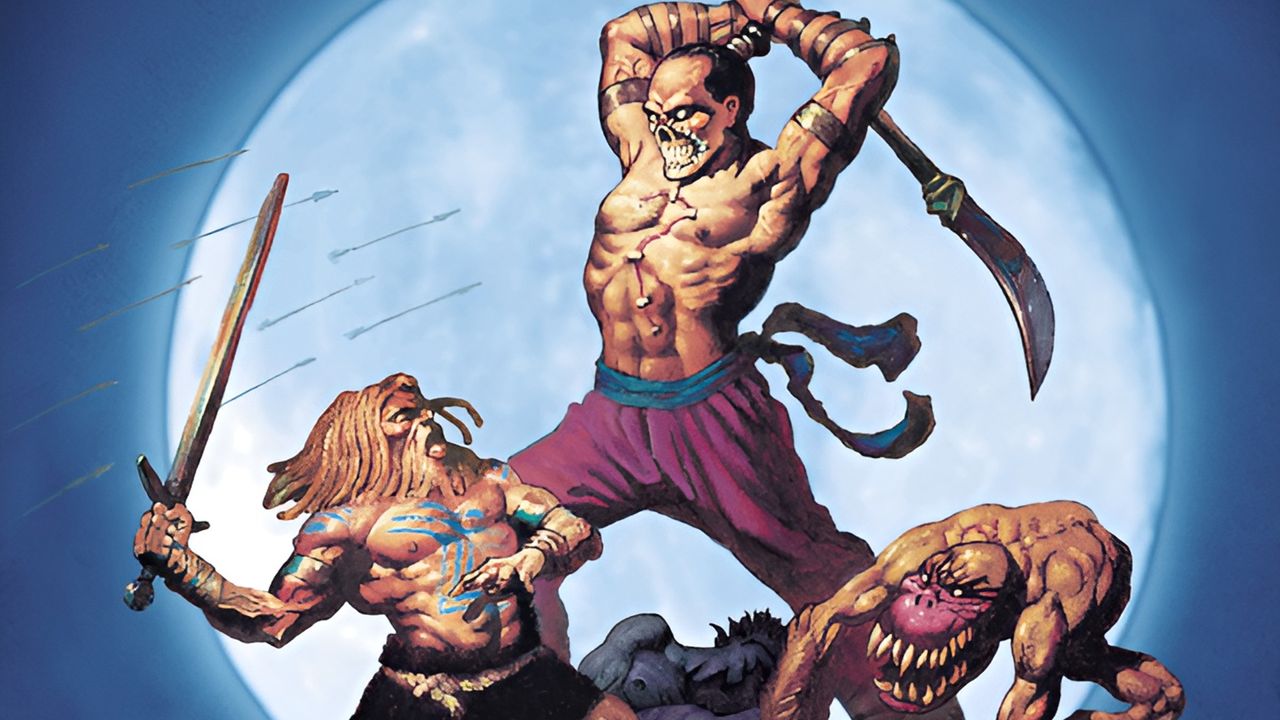
I am, of course, referring to Myth, Bungie's series of low-fantasy strategy games developed between the original Marathon trilogy and Halo: Combat Evolved. It's a curious island in Bungie's FPS-focussed history, one you'd be forgiven for not having visited or even knowing about in the terrifyingly futuristic year of 2026.

Halo is something of a false floor in Bungie's past anyway, tending to obscure everything its success was built upon. But it doesn't help that you can't buy the Myth games online anywhere, while getting them to run on modern machines requires you to jump through a bunch of hoops.

This is particularly wild when you consider what a big deal the Myth games were when they arrived, a shot in the arm for a genre that had quickly become bogged down in Command & Conquer clones. The irony here is that Bungie had not initially intended to get into strategy game development.
(Image credit: Take Two)

Following Marathon Infinity, released in 1996, Bungie had planned to develop another FPS, this one in true 3D. But at some point, Bungie's Jason Jones decided the project was too similar to Quake, and responded by pivoting to a completely different genre.

Bungie had not initially intended to get into strategy game development.

Myth's design was a direct response to the trajectory of strategy games post-C&C, streamlining the base-building, army-rushing loop of C&C and its brethren into pure, tactical squad management.

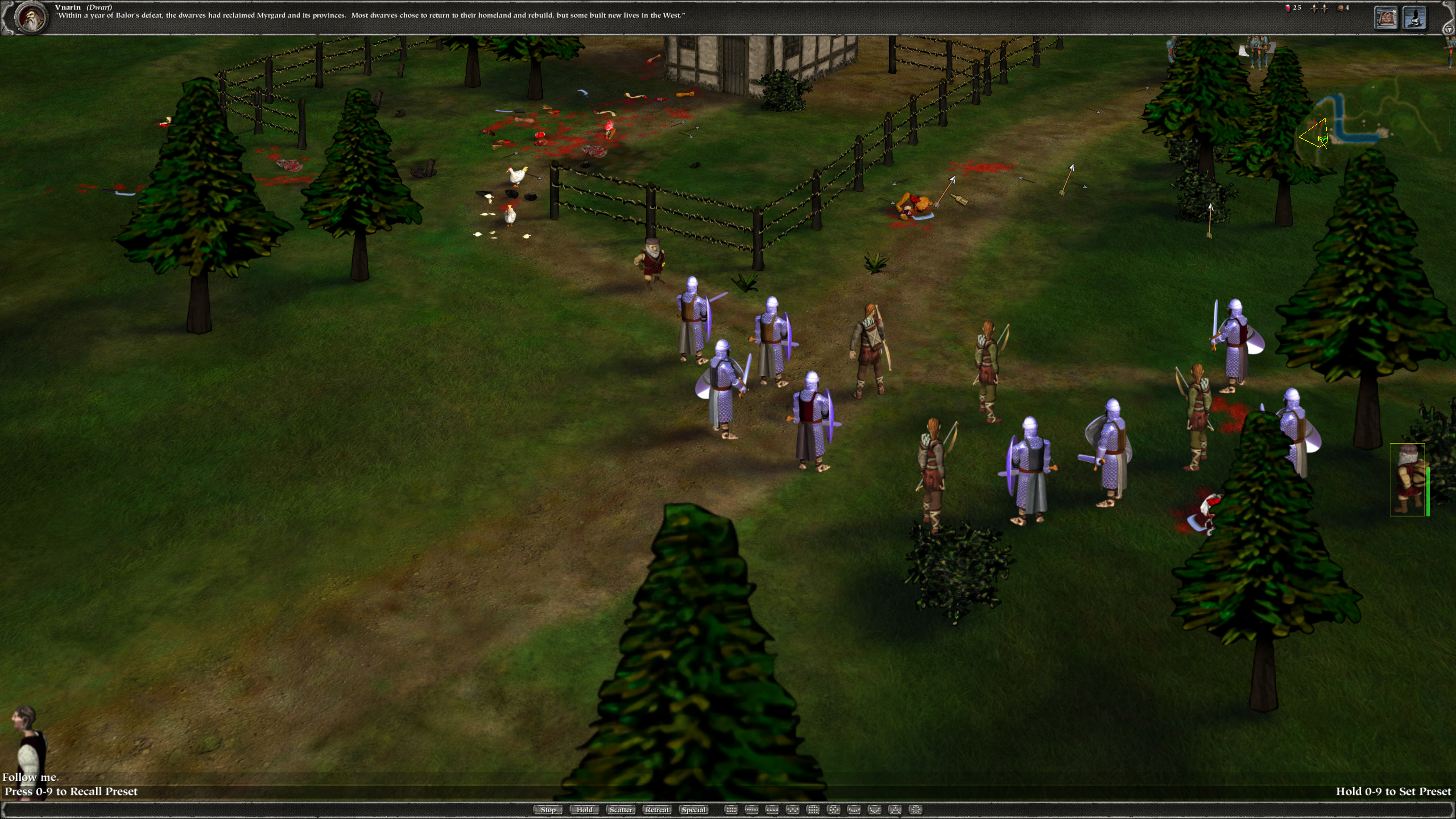
Thrusting players into a grisly low-fantasy world terrorised by hordes of undead, Myth sees players assume control of small forces of warriors, archers and dwarven artillerymen (plus a few other units later in the game). Each mission assigns you specific objectives, like defending a bridge or escorting a village leader through the wilderness. Inevitably, the wretched minions of the Fallen Lords will attack your party, usually in numbers greater than your own.
(Image credit: Take Two)

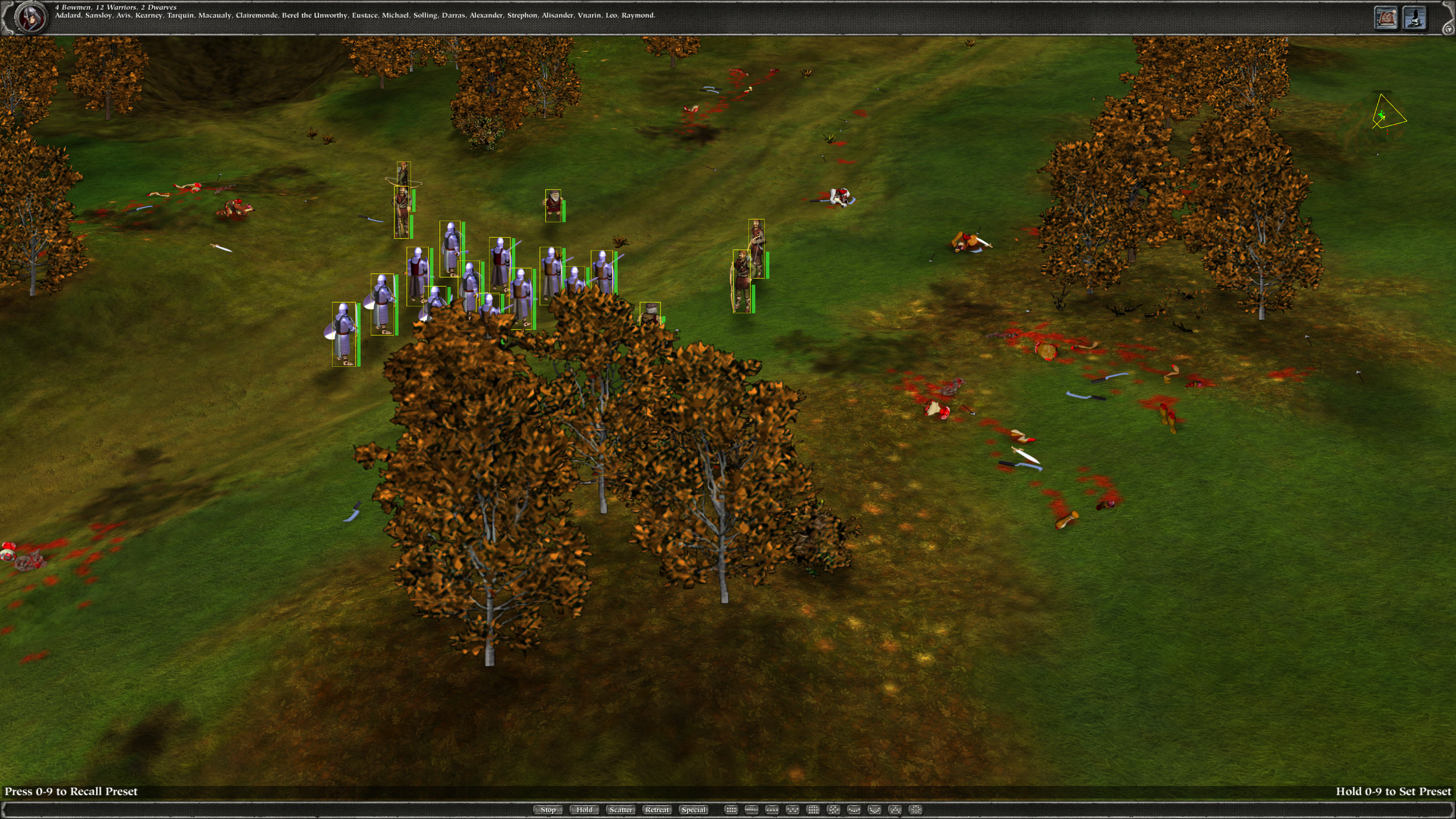
This means you need to use your wits to emerge triumphant. And more than most strategy games of this era, Myth really is a game about wits. Barring scripted reinforcements, the units you start a mission with are what you get to complete it, so you really need to maximise enemy casualties by minimising your own.

You'll want to position your archers so they can thin out advancing enemies before they clash with your melee units like warriors and berserkers, and you'll want those melee units in the right formation so that they can slice through enemy health bars as quickly as possible. Most of all, though, you'll want your dwarves to bomb the un-living shit out of enemies before they have a chance to set a rotting finger on your other units.

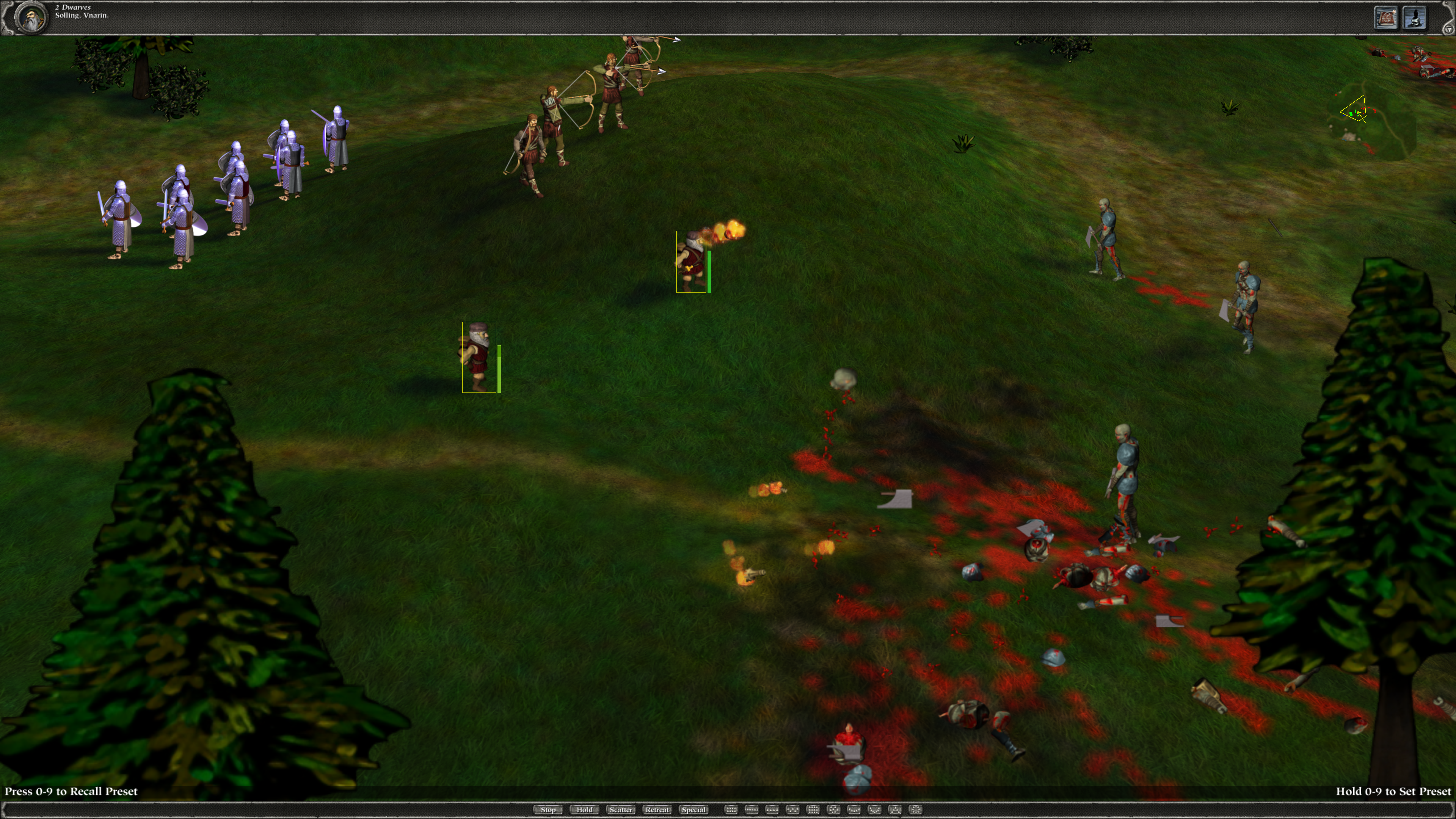
It would be unfair to say that Myth's greatness resides wholly in its Molotov-chucking dwarves. But they are what first grabs your attention, the special sauce that gives Myth a different flavour from other strategy games of the time. As I've mentioned about three times at this point, these growling, grouchy warriors attack enemies by lobbing Molotov cocktails at them. But these incendiary bottles act more like grenades in Myth. Rather than setting enemies aflame, they blow them apart in a spectacular shower of blood and limbs.
(Image credit: Take Two)

The effect was massively ahead of its time, made possible by Myth's ridiculously advanced physics engine. All those zombie giblets bounce and roll in a way that wouldn't become standard in games for several more years. The result is an interaction that simply never gets tiring, as elementally satisfying as blasting an imp with the shotgun in Doom.

Myth's dwarves comfortably reside among gaming's greatest strategy units.

Myth's dwarves comfortably reside among gaming's greatest strategy units. Yet while they seem ridiculously powerful, they're not overpowered. Or rather, they are overpowered, but in such a way that counterintuitively balances the whole game.

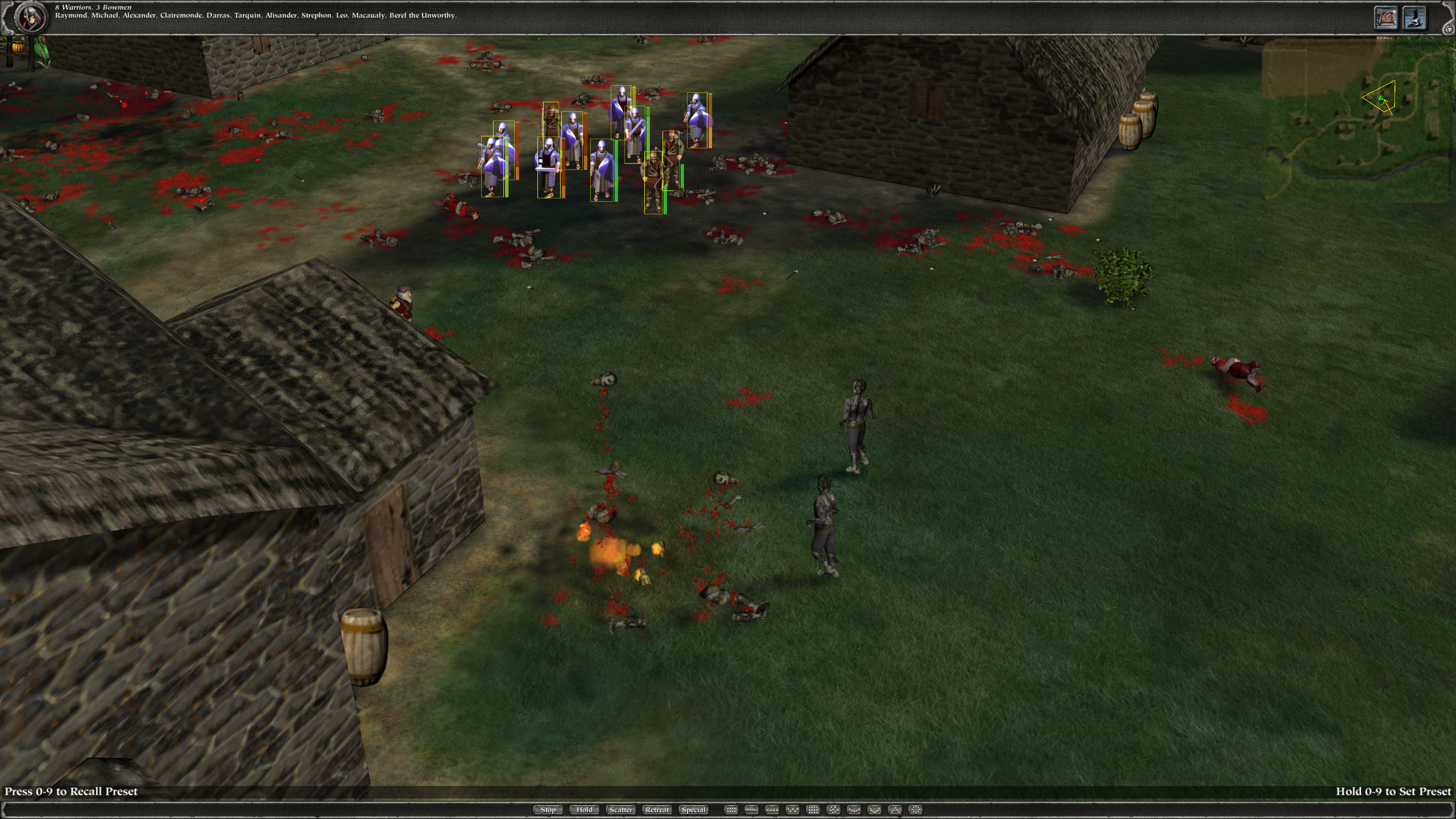
See, while dwarves can take out huge clusters of enemies, they can also take out huge clusters of your own units. And Bungie is very good at building scenarios in a way that makes this a frequent possibility, pulling and stretching your forces so that one poorly timed throw could obliterate your entire front line. Molotovs also occasionally fizzle out due to rain or just bad luck, and since dwarves are all but useless in melee combat, you need to keep them protected.
(Image credit: Take Two)

The downside of Myth's design is that things can go very wrong very quickly, and you can easily put yourself in a situation where completing a mission becomes impossible. Indeed, the original Myth was criticised for its harsh difficulty upon its release. But there is something very appealing about the puzzle-like nature of its mission designs today, and bringing your forces through a mission unscathed is tremendously satisfying if you can pull it off.

Despite gaming being inundated with fantasy games over the last 30 years, there still isn't another one really like Myth (apart from its two sequels, of course). Which makes it more of a shame that you can't buy them, anywhere. While Myth and its sequel were developed by Bungie, the rights are held by Take Two Interactive and I suppose fantasy strategy games are a low priority when you have Grand Theft Auto 6 in your stable (though I'd love to see a Myth reboot developed by Firaxis).

There are ways to play Myth today, however, and in pretty robust form too. If you have a copy or ISO for Myth 2: Soulblighter, you can download the excellent Twice Born Edition, a thorough fan remaster of the 1998 sequel that makes Bungie's RTS run beautifully on modern machines. There's also a separate remake of the first game's campaign available for Twice Born, as well as a full port of The Fallen Lords that reverts the changes made for Myth 2 into their original form. All of them are great ways to experience this weird tangent in Bungie's history, and enjoy two of the most distinctive fantasy strategy games ever made.
2026 games: All the upcoming games
Best PC games: Our all-time favorites
Free PC games: Freebie fest
Best FPS games: Finest gunplay
Best RPGs: Grand adventures
Best co-op games: Better together

Read the whole story
Jagmas
2 hours ago
reply
Round Rock, Texas
Share this story
Delete

Sim racing is flourishing, but what happened to the arcade racer?

1 Share

I became a racing game aficionado at age five playing Lego Racers on my great grandfather's Windows 95 Gateway PC. And I've been a car enthusiast since my days careening the Subaru Impreza Rally Car '99 into walls on the dirt stages of Gran Turismo 2. But sim racing never quite did it for me, and that's become a problem, because sims have largely supplanted mainstream racing games.

Bored during the pandemic and flush with cash after being laid off from my food service job, I bought a Thrustmaster T150 RS—an entry-level rig with a wheel, three-pedal box, and manual shifter (the third pedal and gearbox were extra). I drove my favorite tuner cars in Forza Horizon 4 and tried to make "realistic" driving videos like those viral guys on YouTube do with their thousand-dollar rigs. In sim racing, the sky's the limit; the logical conclusion of the genre is a hardware setup that reproduces every microscopic vibration of your in-game car via high-tech hardware like force-feedback steering wheels and haptic seating.

It was fun, but it never quite stuck. Why? Maybe because my setup, despite being $300—a lot of money for a "casual" gamer to spend on what is, at the end of the day, a controller—provided an at best middling facsimile of the real experience of driving. The T150 RS actually has decent force feedback, but without spending another $2,000 at least on a basic FFB/haptic feedback sim seat setup, the rest of the experience felt about as akin to real-world driving as playing Gran Turismo on a DualShock gamepad.

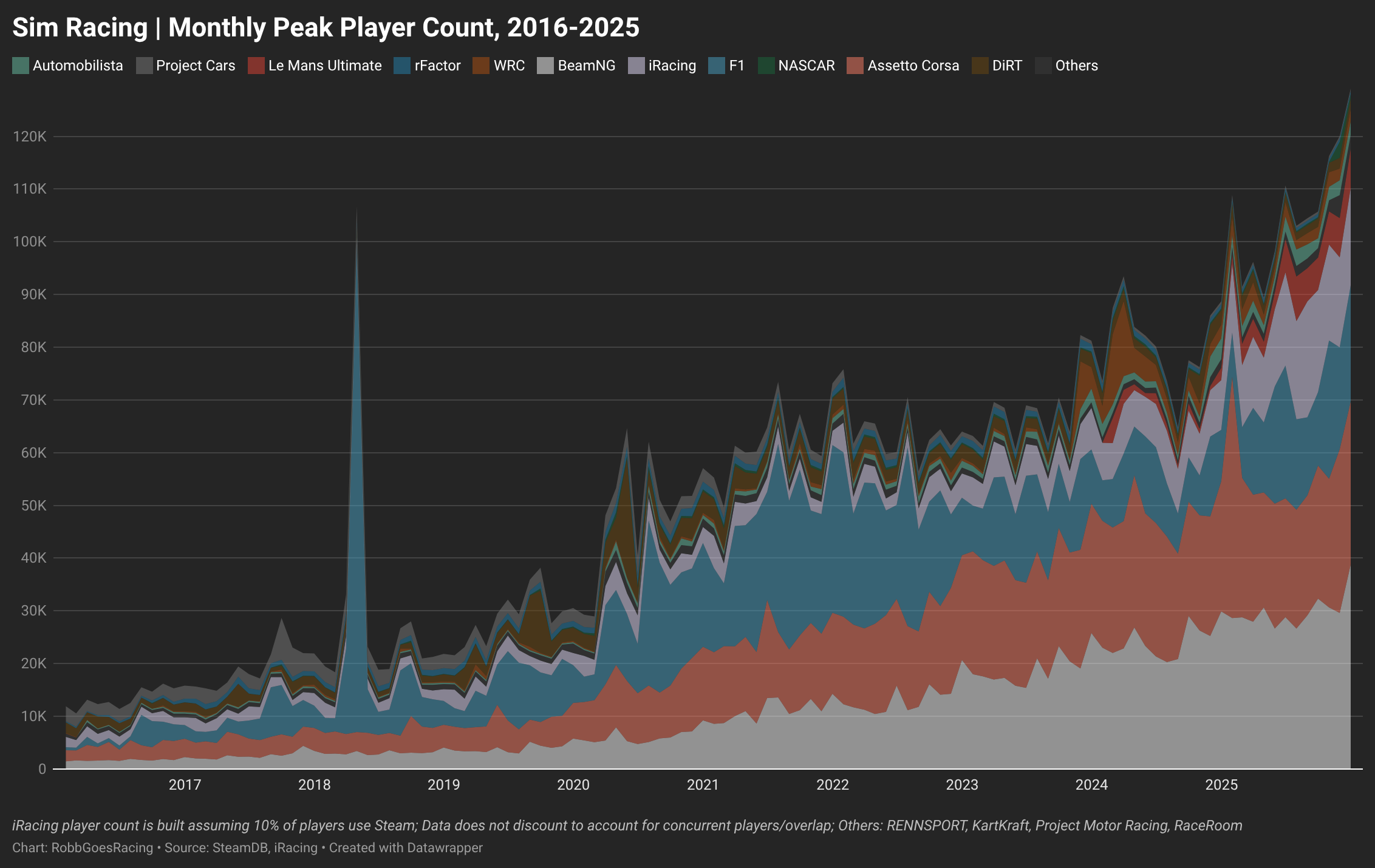
But as sim racing player counts have grown by over 1000% in the last 10 years, the mainstream racing genre has slowly whittled down to a single, albeit highly successful, franchise. The number of releases in the sim space versus the arcade one suggest that sims have basically replaced the historically prolific arcade/simcade genre.

As Reddit user mido_sama mused in response to an article highlighting Forza Horizon 6's massive sales figures, "It has no competition".

Redditor fvgh12345 responded, "the state of racing and driving games is kinda sad. There was so much variety in the PS2 era, some of my all time favorite games. Would be cool if games or successors of games like Midnight Club, Flat Out, Twisted Metal, Driver, and Vigilante made a return."

Recently, PC Gamer's Wes Fenlon previewed the upcoming simcade racer Clutch, and found it just a bit too sim-focused for what otherwise could have been solid open-world-racing competition to Forza Horizon.

Approximate sim racing monthly peak player count, 2016–2025

Approximate sim racing monthly peak player count, 2016–2025, via Robb Goes Racing. (Image credit: Kyle Robb, Robb Goes Racing)

Is sim racing a one-to-one substitute for the old Need for Speed and Burnout blockbusters? Sure, true simulation racers like iRacing and rFactor have sold pretty well for non-mainstream entries. But even the bestselling sim franchise Assetto Corsa has barely beat out sales of Midnight Club—a series that existed for fewer than 10 years in the 2000s, before gaming even hit the mainstream—and has shipped an order of magnitude fewer copies than the Need For Speed catalogue.

My point is: sims may be on the up-and-up, but their rise has accompanied a loss of hundreds of millions of gamers who once flocked to the many now-dead arcade racing franchises. The racing genre writ large has, for whatever reason, simply become more inaccessible and less popular to the everyman.

Meanwhile, real-world racing as a motorsport has become more accessible than ever. In a market where traditional sports executives seem hellbent on hiding their broadcasts behind as many byzantine subscription services as possible, motorsport has gone against the grain. A non-car-enthusiast friend of mine recently told me that he's gotten into F1 and Indycar primarily because it's the only major sport with live events he can follow without jumping through a bunch of expensive hoops.

Clutch racer

Upcoming racing game Clutch from Maverick Games. (Image credit: Maverick Games)

Remember the good old days when you could afford rent catch a ball game with your mates on the cheap? Or, for a gaming analogy, the halcyon years when you, a casual player, could pick up one of 10 mainstream racers on the market and hop on the couch to lay down some laps on a $10 MadCatz controller you found in the bargain bin at GameCrazy?

As motorsport grows more popular, sim racing becomes a cheaper way own a racecar—rather than a more expensive way to play a videogame.

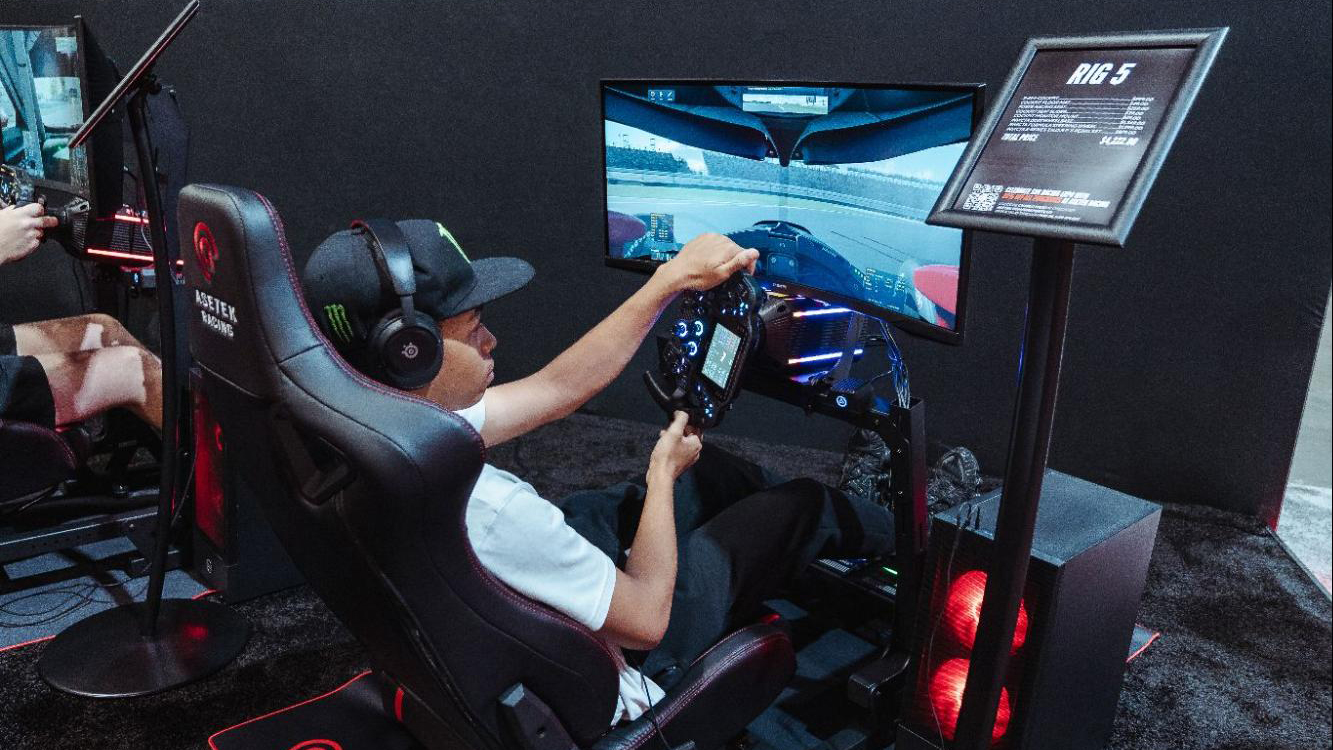
But the expensive simulation hobby has quickly exploded from a niche one for the sweatiest among us to a cool yuppie nightclub activity in cities from Las Vegas to Madrid. Now, the world's largest sim racing trade fair has landed on US shores for the first time, as I covered in the article linked above. I had a theory about why that is.

I talked to Mark Puc—representative of the "OG of sim racing" (his words, but it's true) company Fanatec at SimRacing Expo 2026—about his industry insights. As did everyone at the Expo I interviewed, Puc chalked up the growth in part to Netflix's Formula 1 documentary Drive to Survive. And as motorsport grows more popular, sim racing becomes a cheaper way own a racecar—rather than a more expensive way to play a videogame.

Puc noted, "the correlation between sim racing and real racing is very analog, so one supports the other. And right now, there's a lot of people starting sim racing that are going to end up racing real cars".

Attendees at the 2026 SimRacing Expo.

Attendees at the 2026 SimRacing Expo. (Image credit: SimRacing Expo)

Puc also highlighted Jimmy Broadbent and my own personal favorite sim racing YouTuber Steve Alvarez Brown, alias Super GT—both of whom are sponsored by Fanatec and both of whom went from sim racing on at-home rigs to professional motorsports. Broadbent, who has over 1 million YouTube subscribers, started off vlogging from a shed and now races in the Nürburgring Langstrecken-Serie sponsored by the motorsports suspension component manufacturer Bilstein. Alvarez Brown, also a driver for Bilstein, now drives GT4 race cars on the 'Ring.

For many, games are a pipeline to future passions. As a child, I spent interminable hours in historical strategy games like Age of Empires, and I now have three degrees in imperial and international history. However, while arcade driving games like Need for Speed, Burnout, and the inimitable Rush 2: Extreme Racing USA prepped me for car enthusiasm as an adult, they did not land me in actual motorsports.

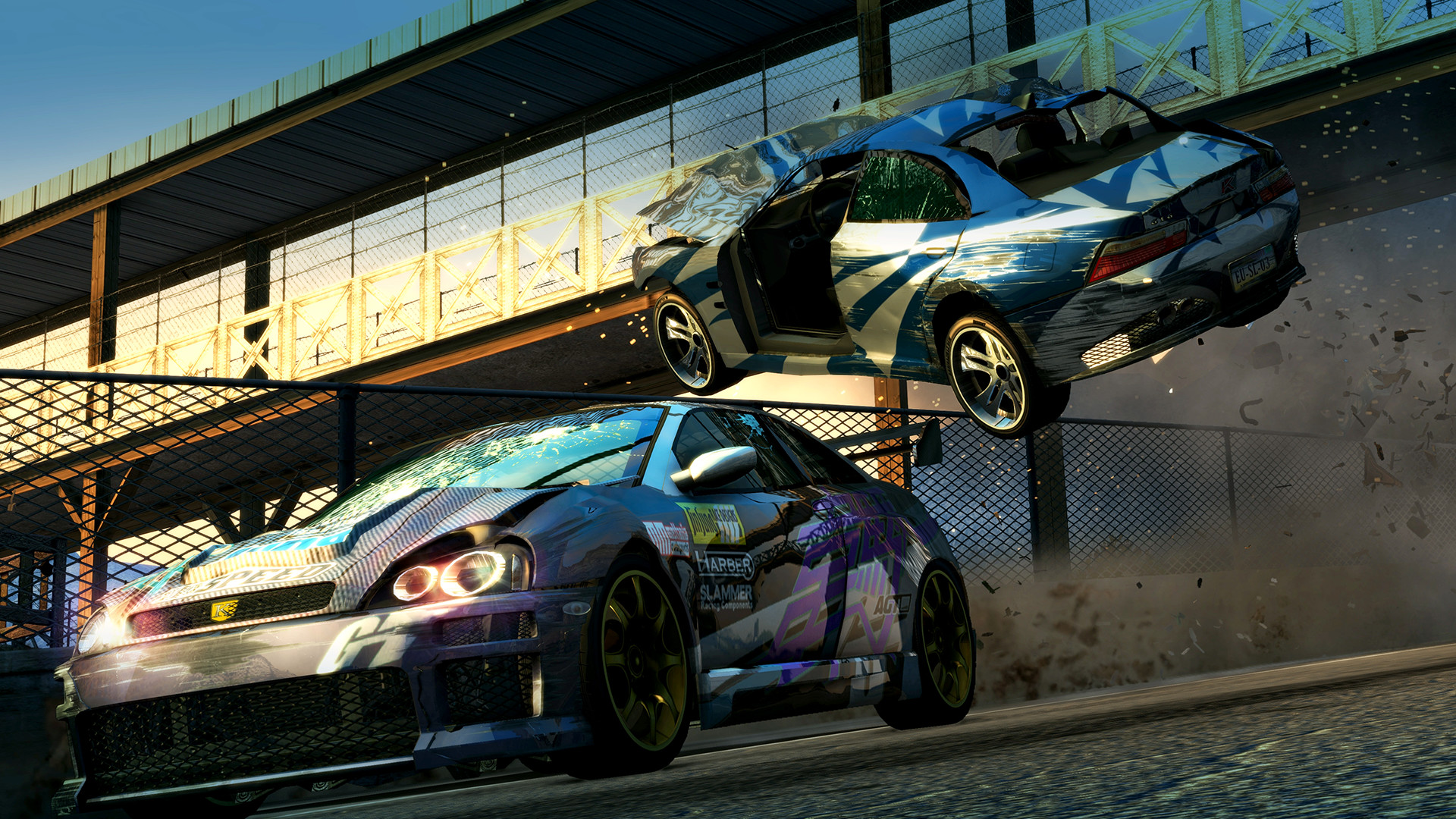
Burnout Paradise

The 2018 remaster of Burnout Paradise. (Image credit: Electronic Arts)

Maybe that's okay. Maybe old-fashioned car games are dying not because of the sim industry, but because real-world car enthusiasm is in free-fall. Maybe sim racers are not less accessible videogames but rather more accessible motorsports, in a world where professional racing has somehow taken off among young people even while their driver's license possession has cratered and, as mentioned above, the rest of car culture is struggling. Maybe a $1,000 sim rig isn't displacing a $10 Play Station controller, but rather a substitute for a $10,000 track-modified Mazda Miata or a $15 million Formula 1 car.

It could be a good thing that enthusiast car culture is slowly dying. But meanwhile, motorsport thrives. I, for one, can always go back to 20-year-old Gran Turismo games and simply accept that sim racing isn't for me. But maybe one day on a lark, I'll download Assetto Corsa, plug in my Thrustmaster T150 RS, and be grateful that the virtual world has kept alive my dream of cruising the Tokyo Expressway in a Dodge Durango SRT Hellcat.


Read the whole story
Jagmas
2 hours ago
reply
Round Rock, Texas
Share this story
Delete

Dwarf Fortress is going prehistoric, with 100 new creatures you can befriend, fight, or eat

1 Share

No matter how many new sandbox and simulation games come along, Dwarf Fortress remains tough to beat for its sheer level of depth and intricacy. Developer brothers Tarn and Zach Adams of Bay 12 Games continue to build out its world with a relentless vigor, and we're about to face a veritable explosion of new creatures. The Dwarf Fortress dino update is pretty self-explanatory, but its sheer scale is impressive, counting 100 "dinos and extinct creatures" across its new roster.


Read the whole story
Jagmas
2 hours ago
reply
Round Rock, Texas
Share this story
Delete

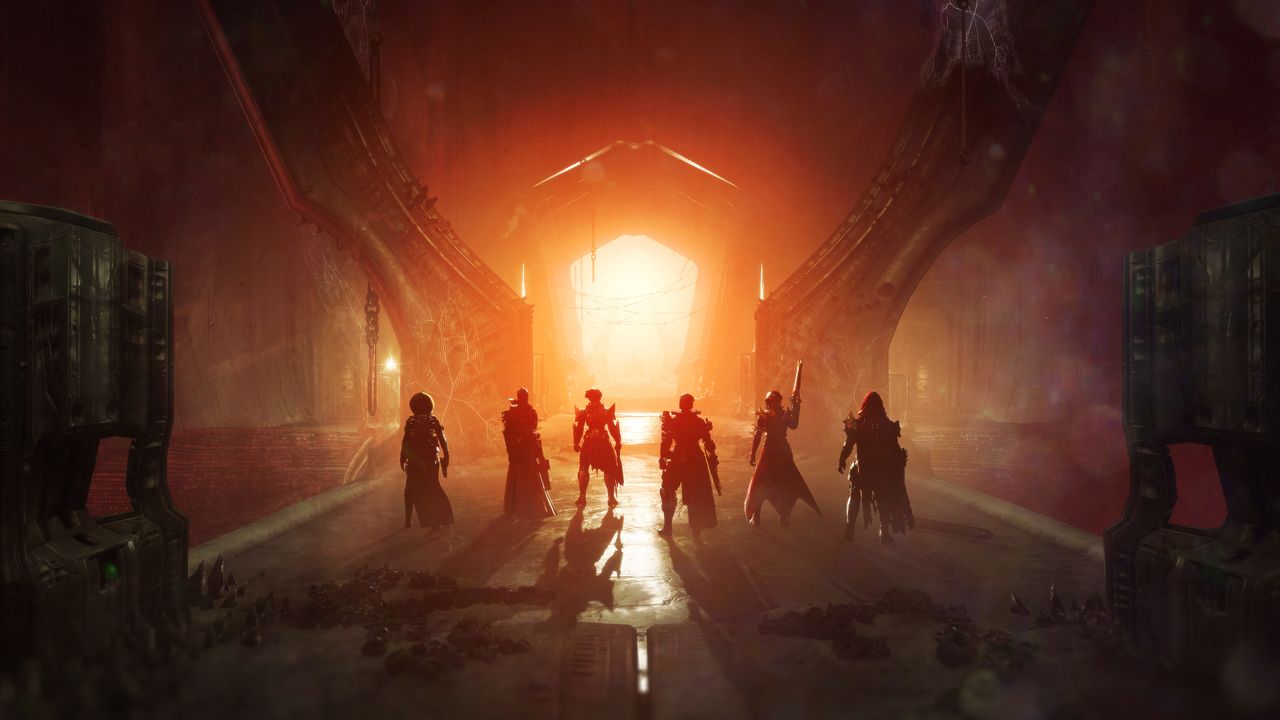
It's bittersweet that the best time to play Destiny 2 in years coincides with its end, but I'm happy for the new players who get to experience its most liberating iteration yet

1 Share

When Bungie announced the final update for Destiny 2, I felt relieved. It surprised me as well. As someone who's spent the past six years (and over 3,000 hours) battling humanity's enemies across the solar system, you'd think that news of my favorite MMO's end would fill me with sadness. But no, just a bittersweet sense of relief as I considered we were finally moving on (as we should've after The Final Shape's year) to whatever the future may hold.

Whether Destiny 3 gets made or not, I genuinely think this is the best thing that could've happened. For fans of the series, it gives us time to reassess our relationship with the games and remember what made them special in the first place, something that definitely felt impossible for me while I was still strapped into endless Portal power climb and the ever grinding gears of the live service machine.

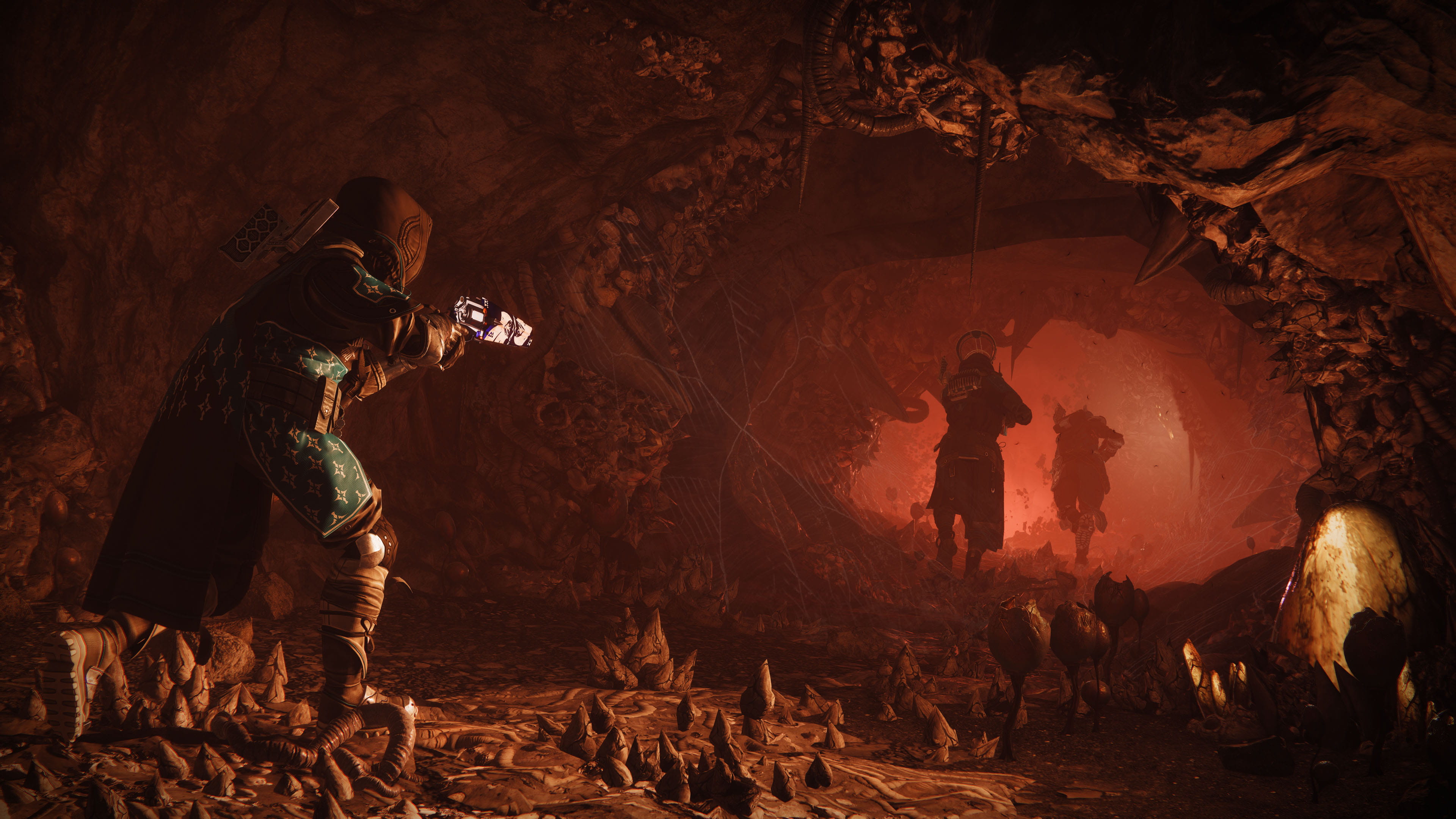
(Image credit: Bungie)

And this is what makes Destiny 2's final update, ironically, a good place to start. It adds numerous quality of life features we've been requesting for years, loot refreshes, exotic reworks, and even attempts to revitalise stale old destinations with the new Distortions activity. The narrative conclusion might be lackluster, but 71 pages of patch notes stand testament to just how much this final update has added to the game.

It's a patch about revitalising and reliving what it was, versus what it became in its final year or so.

What exactly does the new update bring, then? 17,000 words of changes detail the exact tweaks being made, but to summarize briefly:

  • Sparrow Racing returns from Destiny 1
  • A new Pantheon raid boss gauntlet brings back vaulted bosses
  • Restored destination director and simplified Portal
  • Lots of new guns, perk, and loot refreshes
  • The ability to upgrade gear tier for weapons (making the tier system mostly redundant, thank god)
  • Catalysts for all exotic weapons that didn't have them
  • Reworked anti-champion mods so they're linked to weapon frames and the ability to choose between seven artifacts (seasonal buff sets)
  • New aspects, grenades, and abilities
  • More attunement options so you can target farm easily
  • 300 more vault space slots and eight more loadout slots

Even Gambit got some love. As Destiny players do, our clan has had numerous QoL complaints over the years, one of the foremost being the inability to link seasonal artifact perks to loadouts—but Bungie even tweaked that. It's such a strange situation to suddenly have all of these amazing quality of life additions only for it to coincide with the end.

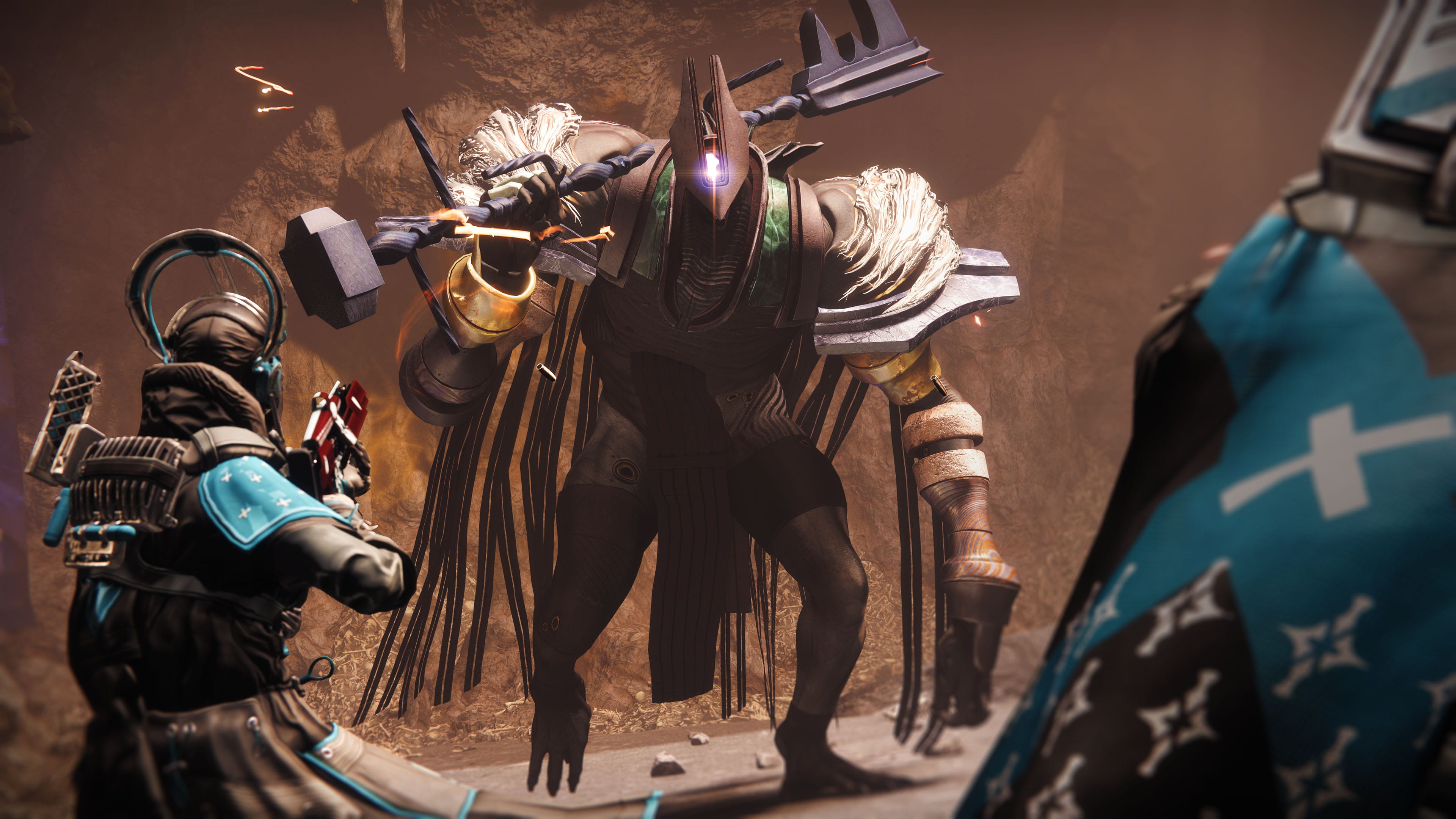
(Image credit: Bungie)

Couldn't it have been this way all along? *sigh* well, at least if you're starting now you can benefit from all of these lovely inclusions. And to clarify, Destiny 2 is still a very good game. I think the reason why anyone on the outside noticed players frequently getting so frustrated with it during its lifespan is frankly (despite Bungie's bungling) because there's no other game quite like it—sure, you can go play something else, but there are few other places you can go for a true Destiny-like experience.

Even though I fell off shortly after the release of Renegades and Edge of Fate's dire Portal grind, I wouldn't trade my 3,000 hours in Destiny 2 for any other game. When it's good, it's really good, especially its raids, dungeons, and high-level activities. There's a reason I've gilded the Conqueror title seven times, because in pure PvE buildcrafting and gameplay terms, Destiny 2 is still at the top of its game.

Sure, you can go play something else, but there are few other places you can go for a true Destiny-like experience.

Obviously, there's an elephant in the room, though—what about the Red War? What about the original Destiny 2 campaign that sets the narrative foundation for every expansion after? I would've liked to replay the campaigns, and it would've gone a long way to repairing relations with players who are still smarting about that content vaulting years after the fact.

Sadly, though, Bungie wasn't able to bring it back out of the vault for whatever reason, presumably because it would fundamentally break the newer version of the game, which I think Destiny players are well aware is held together by string and duct tape. It did, however, finally create a collection bundle where you can grab all of the available expansions in a straightforward way. It's massively discounted right now, and I assume will be for a while yet.

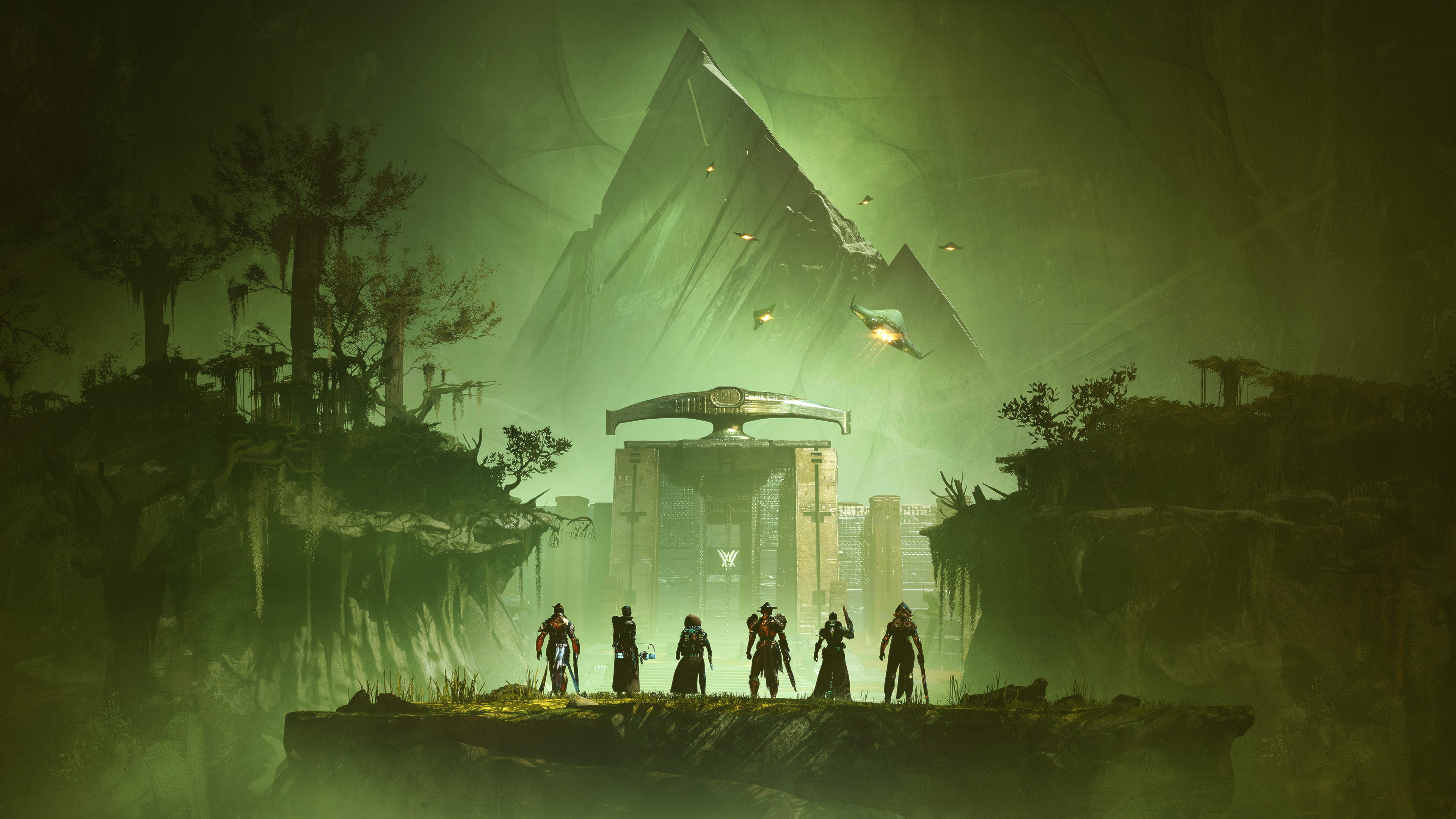
(Image credit: Bungie)

The final update announcement actually made me more excited to play the game than I have been in a long time—finally, I thought, I can enjoy Destiny separate from the live service structure that came to dominate it, sometimes to its detriment. No more escalating power gains or pointless grinds, and all with the backdrop of the current QoL changes like tons of loadout slots so I don't have to think about Guardian Rank, and wide-ranging attunement so I can farm more easily for what I want.

It's like Bungie has unlocked Destiny 2 with this update, and it'll be the most liberating iteration of the game's new player experience ever. And for those of us who've done almost everything, there are new exotics to grab, new builds to make, and time still to tackle those challenges you've always pondered, like ticking off solo dungeons or trying the Pantheon.

2026 games: All the upcoming games
Best PC games: Our all-time favorites
Free PC games: Freebie fest
Best FPS games: Finest gunplay
Best RPGs: Grand adventures
Best co-op games: Better together


Read the whole story
Jagmas
2 hours ago
reply
Round Rock, Texas
Share this story
Delete

The Only Good Thing About ‘Destiny 2’ Ending

1 Share
Destiny 2 is over, but that has produced at least one silver lining on what is an otherwise very sad situation for players.

Read the whole story
Jagmas
3 hours ago
reply
Round Rock, Texas
Share this story
Delete

Why Xbox Won’t Make ‘Elder Scrolls VI’ And ‘Fallout 5’ Exclusive

1 Share
Xbox now commands two of the biggest franchises in gaming, The Elder Scrolls VI and Fallout, but they will likely not make them exclusive, and here's why.

Read the whole story
Jagmas
3 hours ago
reply
Round Rock, Texas
Share this story
Delete
Next Page of Stories