I'm a gamer. I grew up in and around one of the best cities anywhere, Austin, Tx. Head down if you like live music or games!
144777 stories
·
8 followers

'Only the survival of our studio would make us consider such a painful action': Tim Schafer announces Double Fine layoffs just 3 weeks after Xbox cut it loose

1 Share

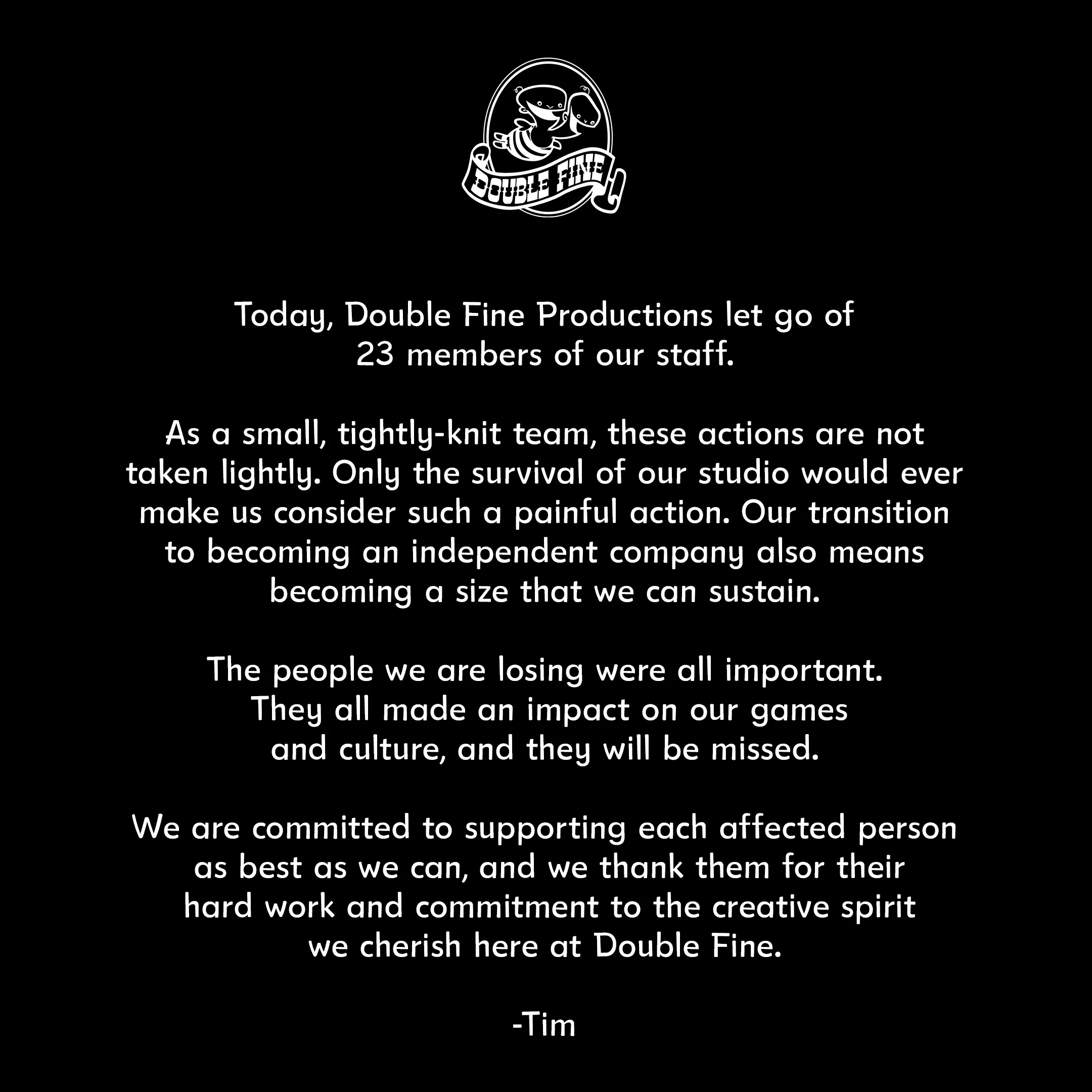
Less than one month after Xbox spun off Double Fine Productions as an independent studio, the developer has laid off 23 employees, a move it says was necessary to ensure "the survival of our studio."

"Our transition to becoming an independent company means becoming a size that we can sustain," Double Fine said in a message shared on Bluesky. "The people we are losing were all important. They all made an impact on our games and culture, and they will be missed."

(Image credit: Double Fine (Bluesky))

The layoffs at Double Fine are sad but not entirely unexpected. Xbox earned plaudits from some corners of fandom for allowing Double Fine to go independent as part of its July restructuring that saw 3,200 people put out of work, but the reality is that without Microsoft backing, the sudden transition to independence for a studio famed for its offbeat, modestly selling games—especially given the current state of the industry—is fraught.

Compulsion Games, the other studio Microsoft cut loose as an indie, put out the word that it needs work just one week later. Prior to the Xbox layoffs earlier this month, numerous Compulsion employees began looking for new jobs, presumably on the assumption that their positions at the studio would likely be lost.

It's not known how many employees remain at Double Fine following the layoffs, but Bloomberg's Jason Schreier said the studio had 90 employees prior to the cuts.

2026 games: All the upcoming games
Best PC games: Our all-time favorites
Free PC games: Freebie fest
Best FPS games: Finest gunplay
Best RPGs: Grand adventures
Best co-op games: Better together


Read the whole story
Jagmas
51 minutes ago
reply
Round Rock, Texas
Share this story
Delete

Survival Games Are Comforting

1 Share
Survival Games Are Comforting

I am known to be a lover of survival games. It’s important to understand here that I don’t mean survival horror or survival crafting or all the other genres that call themselves “survival” when they’re more about running away from zombies or punching trees. To me, a true survival game can have some of those elements, but the key feature is the kind of nitty gritty, daily life mechanics that feel more like chores than play: feeding yourself, dealing with being tired, dressing for the weather, and moving your body through space. You know, boring stuff–the very best kind of video game stuff there is.

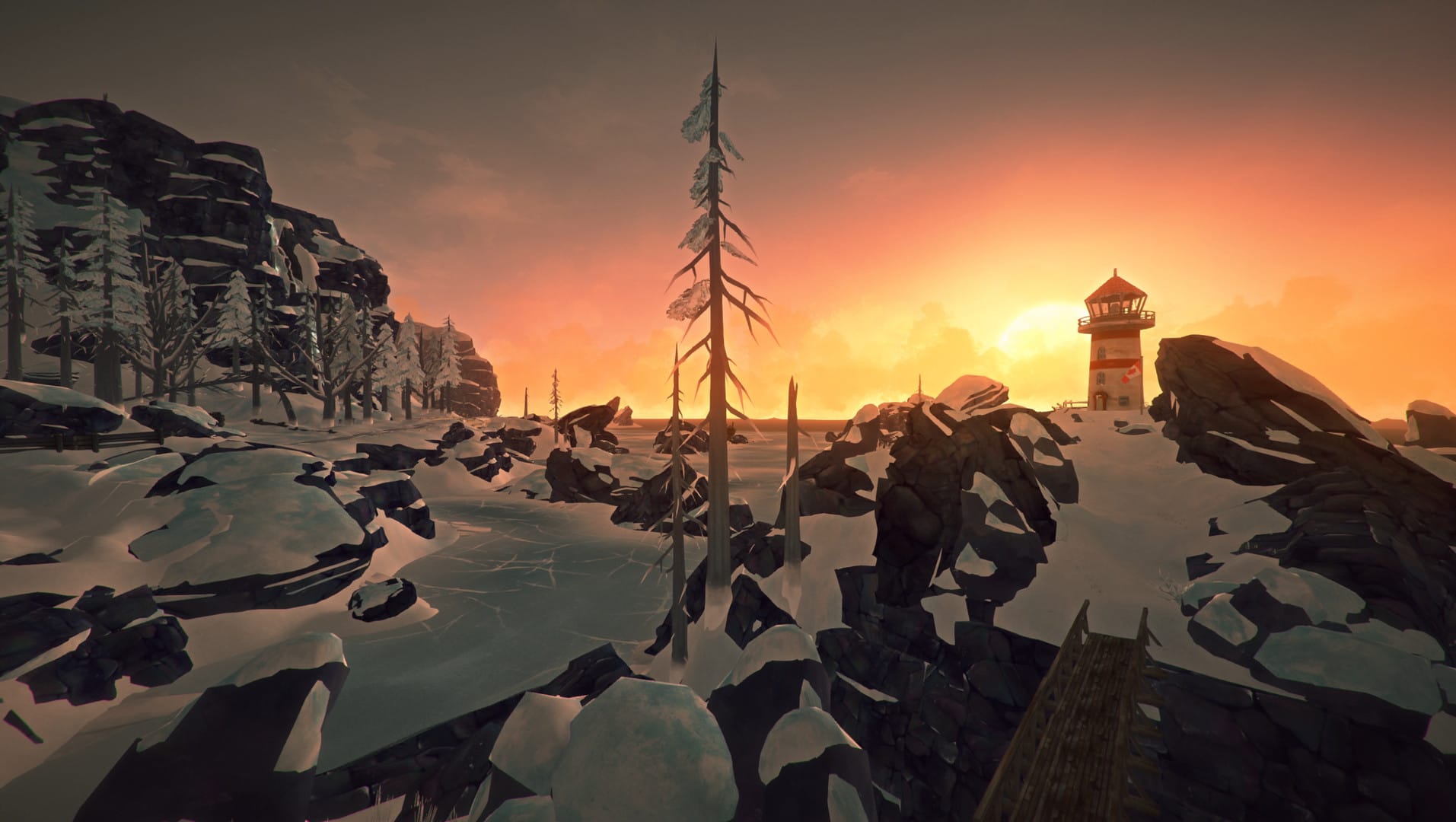
For me, the absolute pinnacle of the survival genre is The Long Dark, but there are other standouts too. Subnautica gets it right with your oxygen meter, and with the way traversing its underwater depths requires so much planning and effort. Recent cozy game Winter Burrow has its brutal cold that makes short journeys outside intense. Don’t Starve is a little heavy on the crafting but makes up for it with its day/night cycle. Games like Project Zomboid and Neo Scavenger have absurd levels of detail that see you worrying about the kinds of things video games usually make trivial, like being bored or thinking about the physical item–shopping cart, plastic bag, your hands–in which you’ll carry your inventory. 

I get why people might not be keen on this stuff. Feeding yourself or packing a bag are annoying in real life, the kind of tiresome stuff you probably don’t want to think about in a video game. Being too cold or too hot is one of the worst things about having a physical body. Video games invented fast travel for a reason: because having to tediously walk across a map, especially if you also have to worry about hunger and thirst and weight and stamina, is usually the interstitial stuff between the “real” gameplay and not the game itself. I understand why you hate it. I do. But you’re also wrong.

For one, I love feeding my guy. The way I frame this is probably telling–I remember a debate somewhere on social media a while back about whether, in a survival game, you are meeting your own needs or whether you’re caring for someone else like a tamagotchi. In my mind, I’m caring for a little creature that is also kind of me. In The Long Dark, I often talk back to my character when they complain about the cold or being tired– “I’m working on it, Astrid;” “Here’s a cup of coffee for you, Will.” Like maybe some of you, I’m not great at taking care of myself in real life, but I am quick to care for others, and I get to play out this instinct in a game without having to talk to my therapist about self-care. And hey, maybe I benefit from it too–that whole “talk to yourself the way you’d talk to a friend” thing can find a new expression in a video game. 

But beyond the potential psychological benefits, I also like how seeing my character as a little guy gives me a place to anchor myself in the vastness of a hostile survival game world. I have this little home base of a body to always return to, one that has predictable needs I can strive to achieve. I find a lot of comfort in this, even when everything is going wrong. There might be a bear outside my Long Dark cabin or a terrifying fish outside my Subnautica base, but my character still needs to eat and drink and breathe, a bit of safe repetition in an ever-changing world. No matter what a survival game is about or what’s going on in it, you also always have that same set of tasks to return to. 

And unlike other video game skills that require timing or complicated button presses–boss fights in games, combat moves–, it’s not that hard to get good at the basics in survival, where it’s at most a handful of button presses to cook some food, or an in-game evening spent managing your inventory. Survival games, stripped down to their very core, are easy to understand and to master: the whole game is built around these same set of elements that don’t change much. You don’t get some escalating series of recipes the way you get harder and harder Hollow Knight bosses. Once you know how to boil a pot of water in The Long Dark, you’ll never face some new variation that will have you throwing aside your controller in outrage.

Of course that doesn’t mean survival games are easy. A great thing about them is the way all their challenge and drama springs from these easily-mastered basics. Their repetition and reliability is what makes them so hard; the fact that your character always needs to eat means your character always needs to eat, and you have to venture out into a dangerous game world sooner or later. It’s these needs that push you out of your comfort zone, and it’s that same soothing regularity that makes them drive a survival game’s gameplay. This pushes you to get creative and think ahead, to problem-solve and take chances. A survival game isn’t always you against a boss or horde of enemies; it’s you against yourself, your appetite for risk or your ability to plan ahead, or–as is so often the case for me in The Long Dark–your ability to sit with boredom or to make good choices, to embrace your curiosity without letting it drive you into doing something stupid.

Most survival games feature permadeath, which can sting when a long run ends and you lose your high-level gear or bustling survival economy. It can feel dispiriting to start again in these moments, but unlike non-survival games where you have to level up your character more or grind through low-level fights again, the gameplay available to you at the beginning of a new survival run is essentially the same as at the end. You might not have the best shelter or clothes, but you get to dive right back into the game. At its core, when you die in a survival game you get to just keep playing, instead of having to earn your way back to where you were when you died. In a way, each survival game run is an episode in one long game; you aren’t so much starting over as you are carrying on.

For me, the more granular all of this the better: the more core needs I have to always return to, the more little moments I can take to find comfort and care, the more opportunities to push myself into adventure and exploration. I can put down a survival game and come back to it without having to watch a lengthy YouTube explainer to remember the story, or dig through my settings to remember a bunch of controls. My survival needs are always there, never solved but also never changing, both a comfort and a challenge in a world of endless new video games and endless new real-life horrors. My little guy will always need a snack and a nap (much like me in real life), and I’ll always feel better–in game and in real life, both for my character and for myself–when I give it to them.

Survival Games Are Comforting

It's Hater Week here on Aftermath. This week we’re letting the hate flow through us by examining what it means to be a hater (and… a lover?), venting about some of our biggest pet peeves in games and life, and giving others a space to do the same.

Read More
Read the whole story
Jagmas
51 minutes ago
reply
Round Rock, Texas
Share this story
Delete

As Destiny 2 is laid to rest, Warframe is experiencing 'massive growth,' studio boss says

1 Share

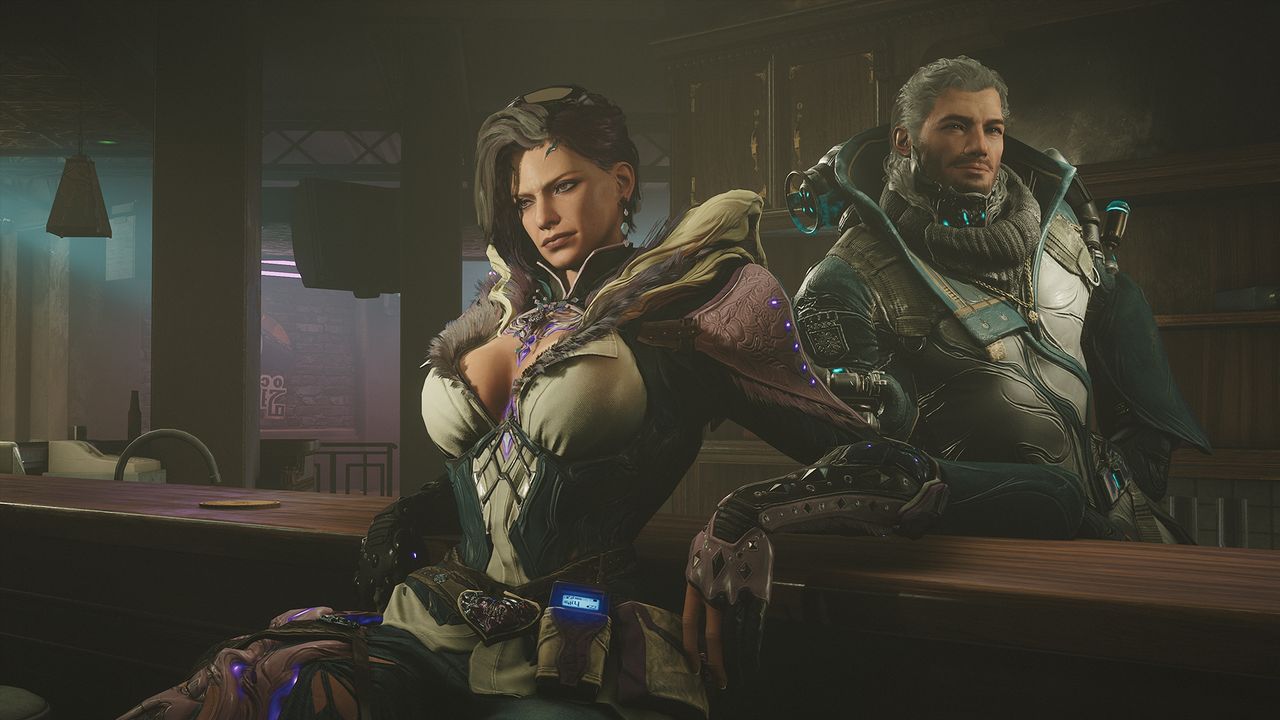
With Destiny 2 now fully embalmed, I find myself wondering—as do a great many others—'how did this happen?' A new Game Business interview with Sheldon Carter, president of Warframe developer Digital Extremes, has me pondering that question even harder: It turns out that while Destiny 2 was floundering, its foremost rival was enjoying "a few years of straight massive growth."

Sheldon said that the original Destiny "really hit us" when it launched in 2014, well over a year after Warframe's 2013 release, and his initial instinct was to "aggressively" compete with Bungie. But that changed over the years, and like others at Digital Extremes, Carter doesn't see the end of Destiny 2 development as a welcome development.

"Over time, what happens is developers from their team come on to your team. New people who you started, they learned what looter shooters are and how that works because they put thousands of hours into Destiny," Carter said. "And so, at our studio, it was kind of a bit of mourning when they released that news. The mood in our studio was pretty dour because of all the connections that you end up having."

But while Destiny 2's player numbers were in significant decline before Sony pulled the plug, Warframe has apparently been headed in the opposite direction. Carter said that "four or five years ago," Digital Extremes began to worry that Warframe had peaked, and it was time to start thinking about what's next. That kicked off development of Soulframe, the studio's second project—but at the same time it also brought about some changes on how the studio handlined Warframe.

"We changed our focus on how we were developing the game, how we were promoting the game," Carter said. "And now we've had a few years of straight, just massive growth ... Now we're in this happy position where Warframe's really thriving, and that gives us the ability to give Soulframe a ton of rope [and] time to really try stuff out and connect."

That's something else Digital Extremes seems to be doing differently: Where Bungie poured valuable time and resources into numerous "incubation projects" that went nowhere, Digital Extremes is moving very deliberately on a single project—Soulframe—which, four years after it was announced, is still in pre-release and not available on Steam.

"I think one of the things you learn as you do a second game that you're trying for the same scope as something like Warframe is that expertise doesn't necessarily mean you don't make the same mistakes as you did before," Carter said. "It just means you can recover from them a little bit faster.

"So that's been the journey of Soulframe—relearning a few of the things that we forgot after so many years, but at the same time using that core [audience], which is just establishing communication, building trust with the audience, and taking our time to get it to a point where we feel like there's enough content, enough story, enough gameplay that when we release it to a wider audience, um it's going to have its core."

Proof that Warframe has the juice: Werner Herzog explaining the game in the most inexplicable yet cool way possible.

But while Soulframe may be the future, there's no interest in stepping back from Warframe—in fact, Carter said skyrocketing prices driven by the rampocalypse could actually help keep Warframe relevant for years to come.

"You can play Warframe on your PS5 Pro and it looks sweet, cutting edge. And you can also play it on a four-generations-ago Android phone," Carter said. "And so for me, I hope that if console demands aren't able to be kept up with, or people need to look at older hardware because the new stuff is so expensive, they're still going to have Warframe to play, because it's a forever game that's always being updated."

2026 games: All the upcoming games
Best PC games: Our all-time favorites
Free PC games: Freebie fest
Best FPS games: Finest gunplay
Best RPGs: Grand adventures
Best co-op games: Better together


Read the whole story
Jagmas
51 minutes ago
reply
Round Rock, Texas
Share this story
Delete

The king of sci-fi movies officially returns to theaters in 1 month, after 9 years away from the genre

1 Share

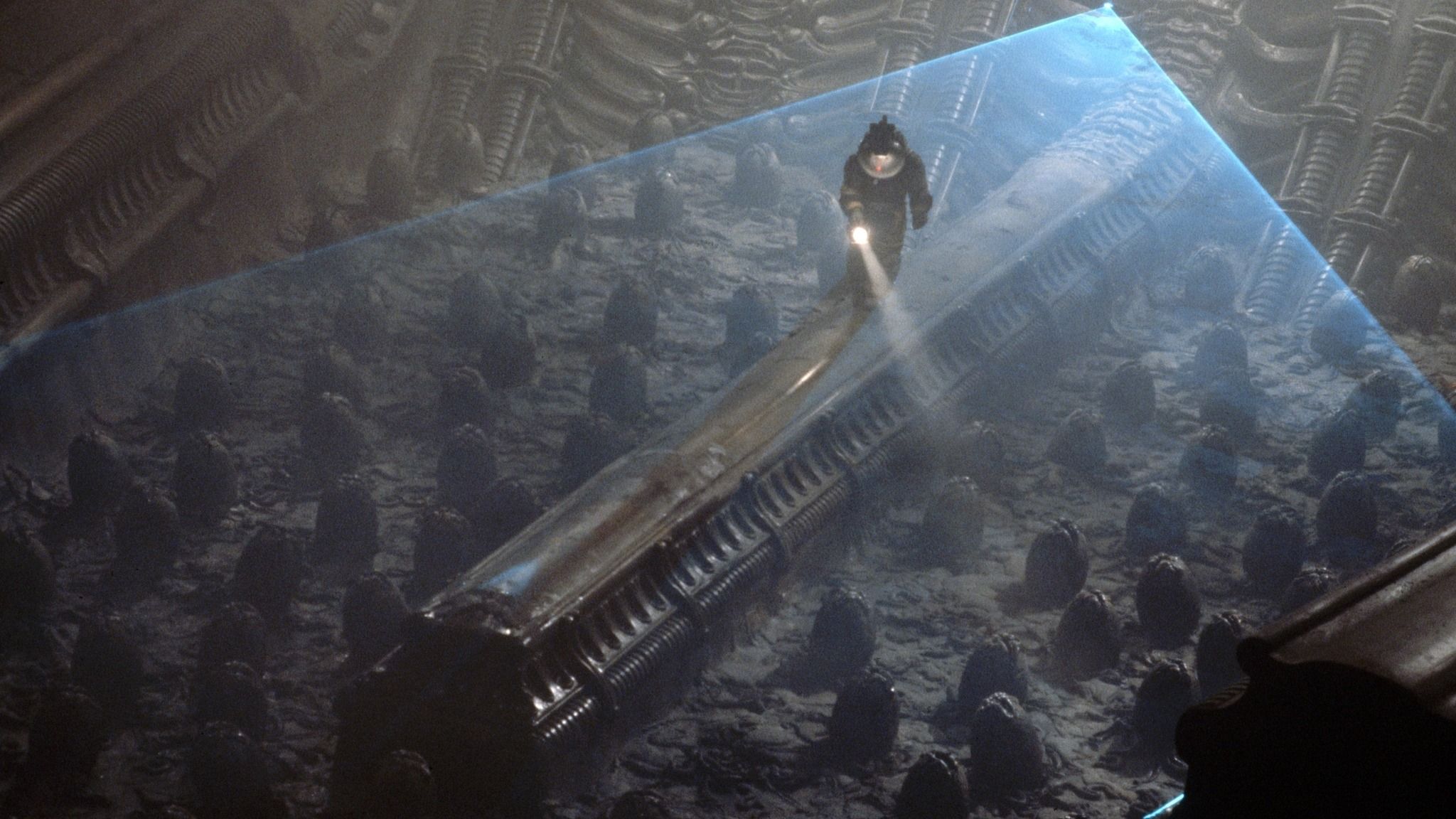
Looking back over his career, Ridley Scott might be most remarkable for his complete inability to stay in any kind of lane. While there are a number of other filmmakers like Steven Spielberg who don't stick to a single genre, Scott's filmography encompasses and even occasionally helped to define horror, science fiction, military drama, historical epics, black comedy, and neo-noir. It's bizarre to realize that the same person directed both Alien and Thelma & Louise.


Read the whole story
Jagmas
2 hours ago
reply
Round Rock, Texas
Share this story
Delete

Brandon Sanderson has officially finished writing his Mistborn movie script

1 Share

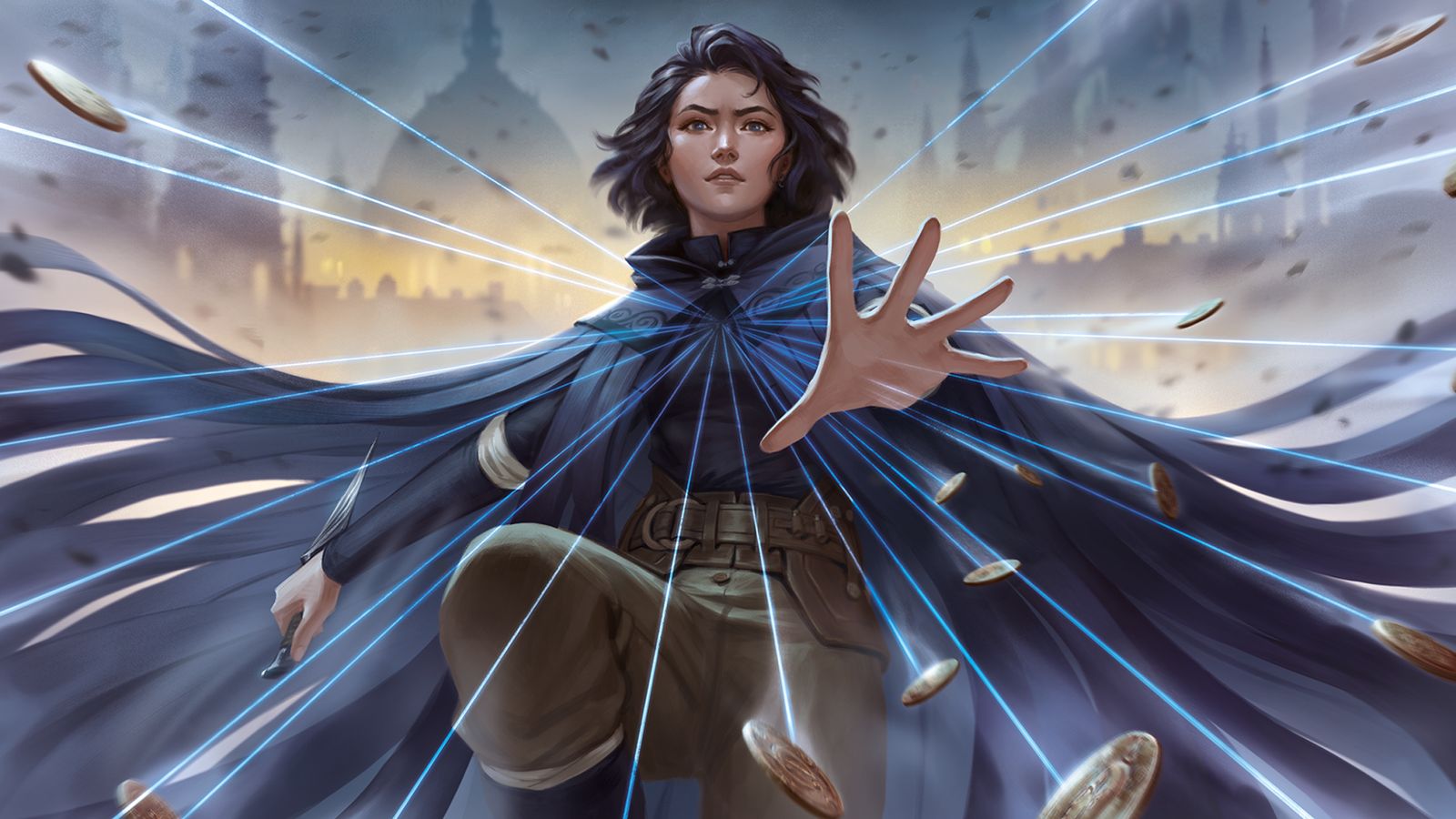
Unlike some fantasy authors, Brandon Sanderson is extremely diligent about updating readers on the progress of his many writing projects. Ever since signing a mega-deal with Apple in January to adapt his Cosmere shared universe, he’s been publicly sharing how much of the screenplay for his first project, Mistborn, he’s written. He kept to his estimated deadline of finishing a first draft in July, announcing on X that he’d finished it just in time to celebrate the book’s 20th anniversary.


Read the whole story
Jagmas
2 hours ago
reply
Round Rock, Texas
Share this story
Delete

Batman: Caped Crusader season 2 review: Even a perfect Joker can't save this show

1 Share

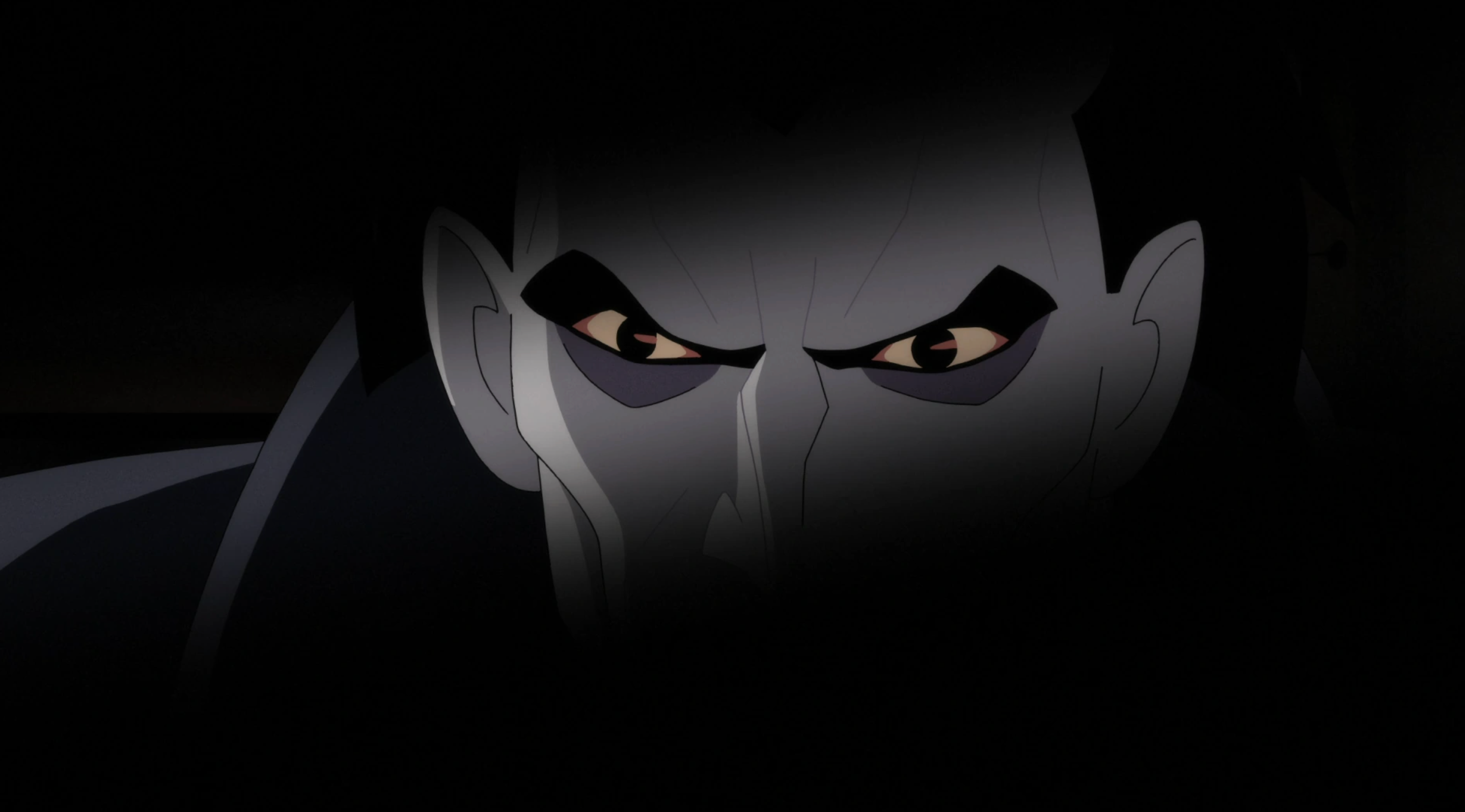
Created by Timm and Eric Radomski, Batman: The Animated Series is one of the most influential animated shows of all time. It created entirely new DC characters like Harley Quinn and Renee Montoya, who would become part of Batman canon, and redefined the backstories of existing characters like Mr. Freeze to turn one-note villains into tragic figures. Caped Crusader, a spiritual sequel from Timm and James Tucker, takes a similar approach to The Animated Series, attempting to redefine those characters yet again, this time through the lens of 1940s film noir. Season 1 largely succeeded, especially in its depiction of Gotham’s deep corruption and its subtle reimagining of Harvey Dent/Two-Face. Caped Crusader season 2 attempts a similar trick and mostly falls flat. Ten new episodes focus on reinventing members of Batman’s rogues’ gallery while putting the spotlight on more minor characters, but few of them truly shine.


Read the whole story
Jagmas
2 hours ago
reply
Round Rock, Texas
Share this story
Delete
Next Page of Stories