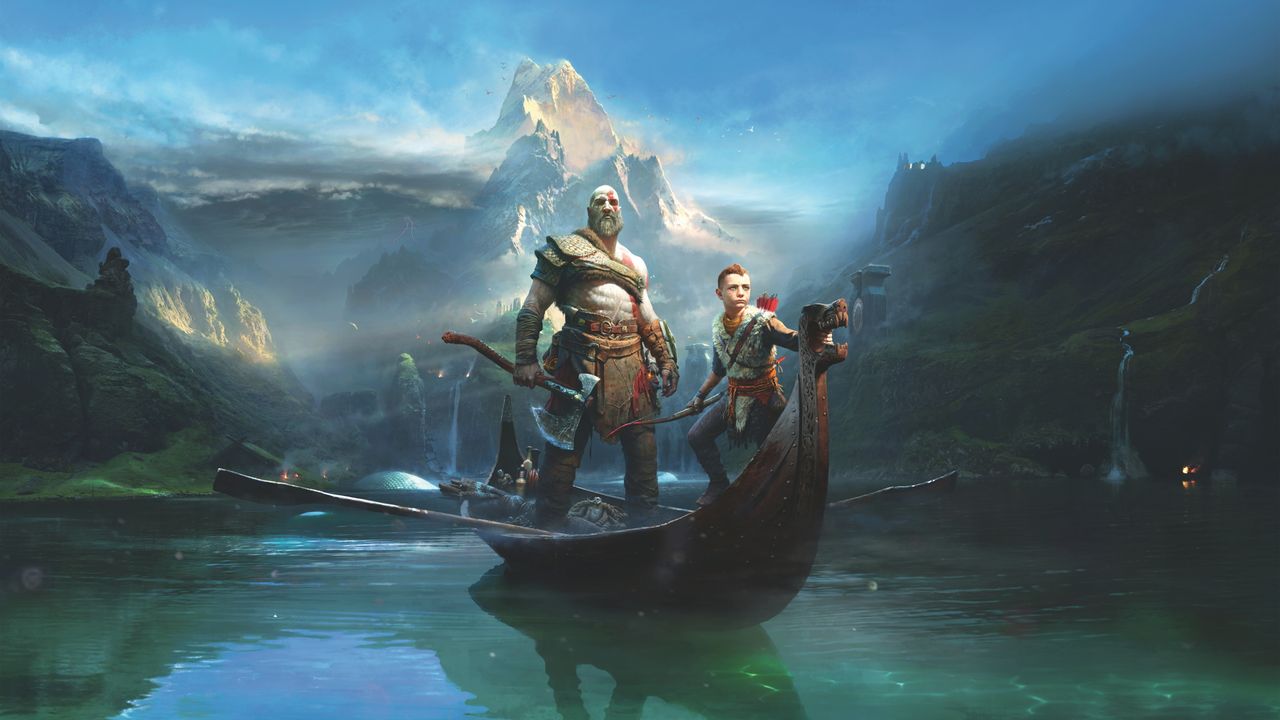
Kratos actor Christopher Judge says he did indeed read for the role in Prime Video's God of War TV show, but has "no desire" to take it on and nothing but well wishes for newly cast actor Dave Bautista.
"I did read for it!It was so hard for me to memorize my lines, which I never had a problem with," Judge told Collider. "And that was my mind and body starting to tell me, 'You don't want to do this.' I was one of the leads of Stargate at 33 to 44 and then stopped. Now, at 62, to be the lead, I just have no desire to live that way again."
Judge played Jaffa warrior Teal'c in the sci-fi series Stargate, with his tenure spanning some 211 episodes across 1997-2007. In 2022, he became the second actor to provide the voice and motion capture for Kratos in the God of War video game sequel God of War Ragnarök.
As it stands, the official God of War cast includes Ed Skrein as Baldur, Ólafur Darri Ólafsson as Thor, Mandy Patinkin as Odin, Teresa Palmer as Sif, Max Parker as Heimdall, Sonya Walger as Freya, and Alastair Duncan as Mimir.
"With Ryan, I thought that was absolutely the right choice," Judge continued. "He's played all the games. He's a gamer and new father; like, who better? Then when he got hurt, it was like, are they going to take time to read with and call people back? So when I heard the name of Bautista, I thought, 'Didn't he just lose like 100 pounds?' So I hope he's going to be great. I think he's going to be great. I just hope it doesn't cause any health issues to put back on all that weight."
God of War does not yet have a release date. For more, check out the new PS5 games on the horizon, plus all the new TV shows coming your way in 2026 and beyond.
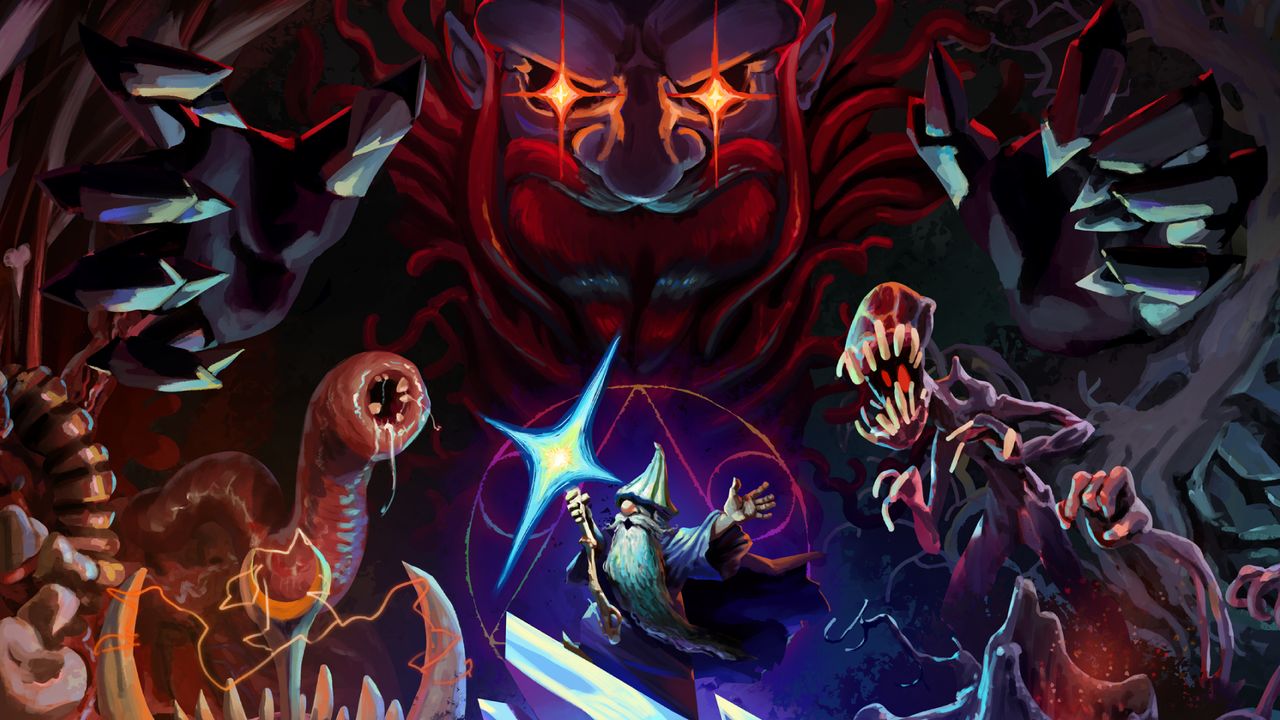
Dwarf Fortress has an endless capacity for telling stories. It's a game built on procedural generation, and any longtime player'll be able to spin up a dozen yarns about some absurd thing that happened to their gaggle of miners.
Just look at a headline from our own Lincoln Carpenter: "Dwarf Fortress forensic specialists blame mysterious case of spontaneous human combustion on a historical artifact that suddenly remembered it's four times hotter than the surface of the sun." What a beauty.
Anyway, this sort of puts the lie to the idea that generative AI will be the first advent of something that can tell infinite stories, always and forever—because Dwarf Fortress has been doing that without a single LLM for its entire existence. Point being, if you want something that can tell infinite stories, you're probably best off giving us the tools to do that, rather than the finished product itself.
Speaking to PC Gamer's Joshua Wolens at Gamescom 2026, co-creator Tarn Adams gets a little into it while talking about how they decide whether a simulation's worth it to layer on top of the game: "If you feel like you've played through it yourself a bunch, and you're like, 'oh, that was cool. That's a good beat,' and you're seeing a little narrative forming? Then you know it's going to work."
Adams talks about a hypothetical in which a meeting of dwarven barristers is interrupted by a very rude dog that comes in and bites someone—not even particularly strange, by Dwarf Fortress standards. Asking him as to why we find these emergent, mechanics-based stories so endearing (as opposed to AI slop, which hasn't yet produced a notable story people seem to like), Adams responds:
"Well, I mean, [you like human stories] because you're a human, and you resonate with things that other humans have done because there's a common experience at just the barest basic level.
"You can't always tell," Adams admits. "And that's part of the trick, right? That's what a Turing style test is, right? Can you tell the human spark that's in there? And when you fail a Turing Test as a human, meaning that you got confused by a robot … maybe that's credit to the robot, or maybe that's discredit to you. I don't know which one, but we're all going to be very sorely tested in the coming years as we're surrounded by such matter."
It's an interesting way to look at a Turing Test—not whether a computer can act as intelligently as a human, but whether a computer can replicate our "human spark". Which, at the risk of sounding sentimental, does feel like a vital part to actually enjoying art.
Speaking personally, a large part of why AI art or stories don't interest me isn't necessarily in the technical proficiency of what's happening—it's because I'm interested in learning about a person's worldview, their tastes, their likes and dislikes, their hopes for the future, and having those hopes stirred in myself. The fact a person made something causes it to be more interesting to me.
Which I suppose is why the proc-gen stories of Dwarf Fortress are interesting, because there's a human touch in how the random, computer-generated narratives are described. If you just rattled off a list of events, you'd bore me half to death. But phrase it like Lincoln did above, and I'm having a sensible guffaw—these silly little dwarves shall make writers out of us all.
There appears to be a bit of drama occurring within the official Discord of Quinfall, as the devs of the sandbox announced that they have parted ways with one of their community managers and that managing the role is going to be different moving forward. “We have carefully evaluated the feedback from our players and concluded that […]
If you happened to still have questions about the event league that’s coming to Path of Exile 2 later this week, even after you watched that earlier video showcase, then perhaps an FAQ provided by Grinding Gear Games will help you out. Some of the answers will likely seem obvious to fans of the MMOARPG, such as […]
The game industry is—to use the lightest possible language—in an interesting spot. While videogames are as profitable as ever on paper, we've had a few consecutive years of brutal layoffs and studio closures, as well as all of the knock-on impacts that the advent of generative AI (and the subsequent and boneheaded insistence that it's the future) has had. Billions in spending, skyrocketing hardware prices, the whole kit and caboodle.
Which, once more, has exhausted Dwarf Fortress' creator Tarn Adams, who spoke to PC Gamer's Joshua Wolens during Gamescom 2026: "They're trying to have a CEO press a button that makes a game, and then everyone else somehow buys it without a job. So I don't see that going anywhere sustainable, and I feel like there will simply be a pop and a reckoning and then [it's on repeat] unless people do something else."
Adams says it's not just games that've been suffering, either: "I mean, everyone I know, their bosses are slowly getting psychosis, right? They're just like, 'yeah, but did you use AI on your commits?' And they're like, 'oh well, I'm not happy with this guy,' you know. 'We'll probably have machines do the job'.
"It just reminds me of like a fucking Dead Kennedys song or something. It's just the same old shit. I mean, they laid off my dad from the sewage treatment plant because they didn't understand what his job was, and he was the computer guy there, and then they don't have a company anymore, so it's like it's the same shit."
He's not exactly wrong—it's not as if the current industry problems are unprecedented, or came out of nowhere. Since the advent of modern capitalism (and likely a long while before that), those in charge have often misunderstood, underestimated, or dismissed the hard work that goes into labour they don't understand.
It's become particularly nasty with generative AI, however, because now said CEOs can still see an end result that mimics the thing they don't understand—and are able to self-delude themselves into thinking it's replicable at scale, or that it's even producing the same quality as the product they've actually been selling.
After all, if actual studies are being done into AI-induced psychosis that's impacting us serfs, there's nothing to say the executive suite is immune, either. Especially given that a lot of them don't even understand why others are put off.
"It's been going on forever. That was before AI—or this form of AI," Adams says, before lamenting: "They took the letters from me! I have to talk about dwarf behavior now. I can't even talk about dwarf AI. It doesn't exist. It's dwarf behavior, and they misbehave sometimes."
There's no denying that Afterworld is a traditional grand strategy game in many ways--big foggy maps, territorial clashes, macro and micro decision-making--but its end-of-the-world scenario presents an opportunity for Paradox Studios to elevate the genre further still. Even in the brief glimpse we had during a hands-on play session at Gamescom, a number of differences are already showing.
For a start, Afterworld has a very clear focus on lore-building, which is something the more historical games often take for granted. If you're playing as a Roman General or a post-industrial capitalist, the player tends to know what happened before that point, as a rough approximation of historical events can be summed up in an info screen before moving on. Afterworld is very clearly the outlier: Taking place some 100 years after a mysterious fictional apocalyptic event known only as The Fall, there's a lot to unpack.
When you start the game, you're given a vague choice of how you'd like to conduct yourself during the early hours of the campaign. For the demo, we were the de facto leader of a band of newly emerged vault citizens (where have we heard that before?) and our reactor was about to explode. A ranger was quickly sent into the fog beyond, and our people moved a safe distance away from what was about to be a very smoky hole in the ground. There are other beginnings to choose from, but the game offers seemingly endless chances to change who you are as you live through its various terrors and triumphs. The beginning is not as important as what you choose to do next.
https://www.youtube.com/watch?v=9PU1e7kfkfs
Instead of traditional nations, you'll have bands, tribes of people with established belief systems and leaders--some friends, some foes, some undecided and purely mercenary. You'll come head-to-head with them fairly quickly, and if they don't get the jump on you, you might be able to integrate them into your society by spreading your values, finding shared beliefs, offering home comforts and political representation, or forcing them to kneel to your might. As well as managing resources and territory, you'll be managing your band's morality and ethical code. The depth to which this is done dawns on you the more you play. Those decisions you made during the starting slides can quickly be overridden as new ideas emerge.
Instead of a traditional technology tree, you'll play with concepts in the Idea Tree, which builds knowledge through specific clusters that are unlocked through exploration. Your tribe begins to build its story almost immediately, and if you lean into a particular side of the Idea Tree, you might become a pacifistic band of animal herders, a brutal gang of feral cannibals, or a cult looking to follow the path of enlightenment at any cost. You can embrace or reject old world ideas, as well as making tough choices to survive that could compromise your ability to lead. A cult of personality only works when everyone buys into it, and if people start starving, dying off, or being ignored, you'll have a revolt on your hands.
Your people will also probably, by necessity, be more nomadic than in most grand strategy games. There is a mid-to-late game goal of conquest if you want it, but the first objective of the game is simply to survive. You'll not always emerge somewhere hospitable--procedurally generated disasters will dictate what you find. Your next area could be irradiated, picked dry by scavengers, or filled with warring tribes. You'll need to gather food and resources, but setting down a permanent home might take some time.
Some of the most powerful beings in the game are the Ancients: warlords and religious icons who wield immense power and can be appeased and worshipped or angered and made hostile. You can also curry their favor and organize a coup if you're confident you have the support. Unlike other grand strategy games where you can choose powerful established nation states to put your weight behind, with Afterworld you will always start as the underdog. You're not the protagonist of any story, just someone who also has to survive and do what's best for your people. The developers have been very clear that the world moves on with or without you.
Afterworld
When you join the world in this state, you discover the mechanics of the game at the same pace you discover the in-game world. A tentative exploration could lead to resources, ideas, or tech. It could also land you in trouble. The consequences of The Fall are far reaching, leaving fragments of story scattered around the map for you to find. Ruined cities can be repatriated and old weapons remade, the technology of the ancient world in-game is still the stuff of science fiction in real life.
Victory conditions are also more survival-adjacent than anything we've seen in most grand strategy games. Afterworld is perhaps more comparable to Frostpunk than anything Paradox has done before. You could, technically, spend all your time and resources repairing the bunker so you can slide back in, shut the door, and live out your short lives in blissful ignorance. You could build your troops and religious fervor and take on one of the Ancients, ruling in their stead, you could build advanced tech and escape to the stars--whatever your idea of survival is, Afterworld says you can make it a reality.
Afterworld is coming to PC but does not yet have a release date.
 Log in