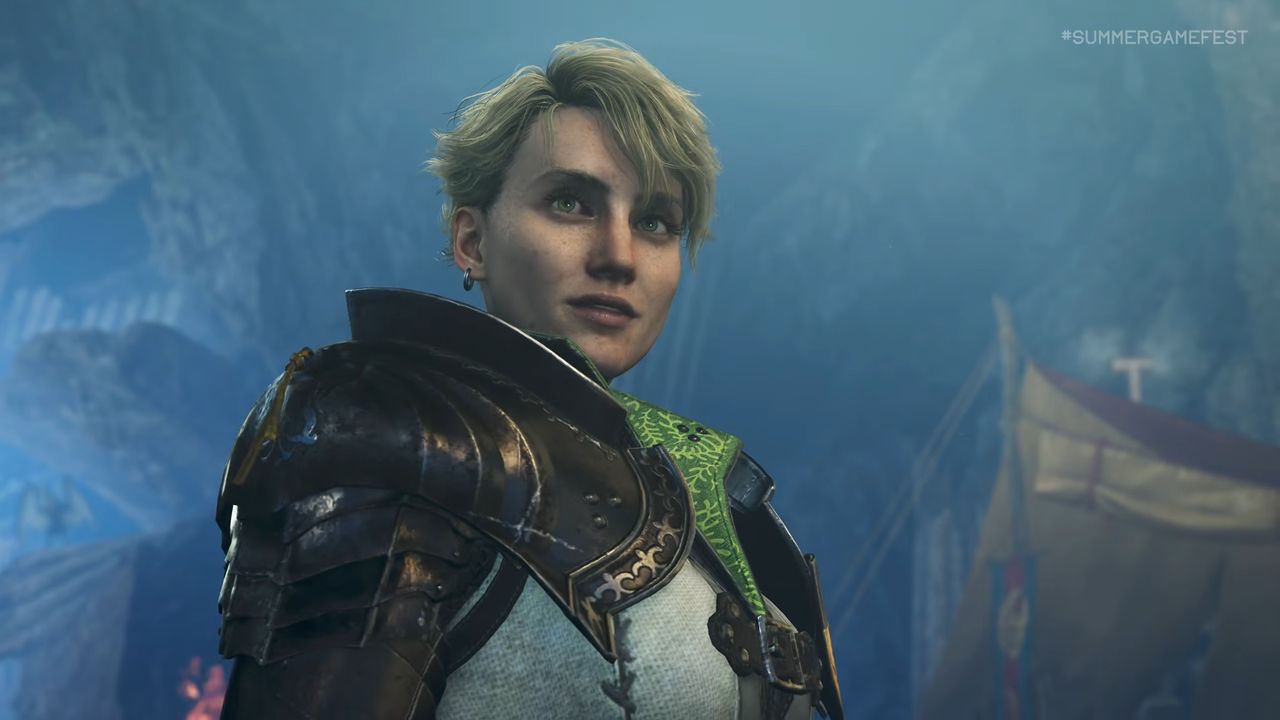
Besides announcing the Resident Evil Code Veronica remake, which is dropping the “Code” from the original's name, CAPCOM had other announcements to share during this year's Summer Game Fest showcase. Among them was a massive expansion to Monster Hunter Wilds called Monster Hunter Wilds Ascendance, which is launching on PC, PlayStation 5, and Xbox Series X|S sometime in 2027. The announcement trailer provided the first look at a brand-new location filled with floating islands and ruins, which already looks significantly more vibrant than anything in the base game. In addition, the trailer also provided a look at the core new […]
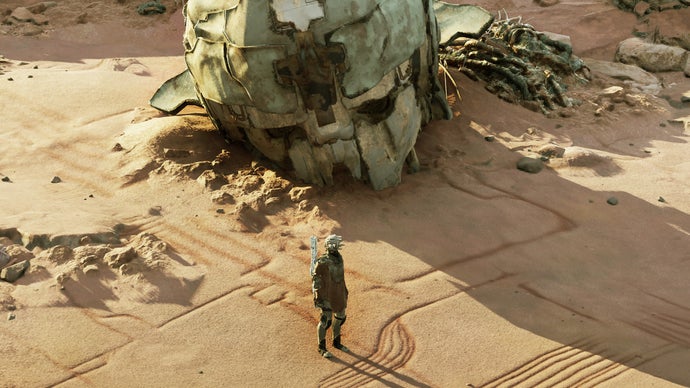
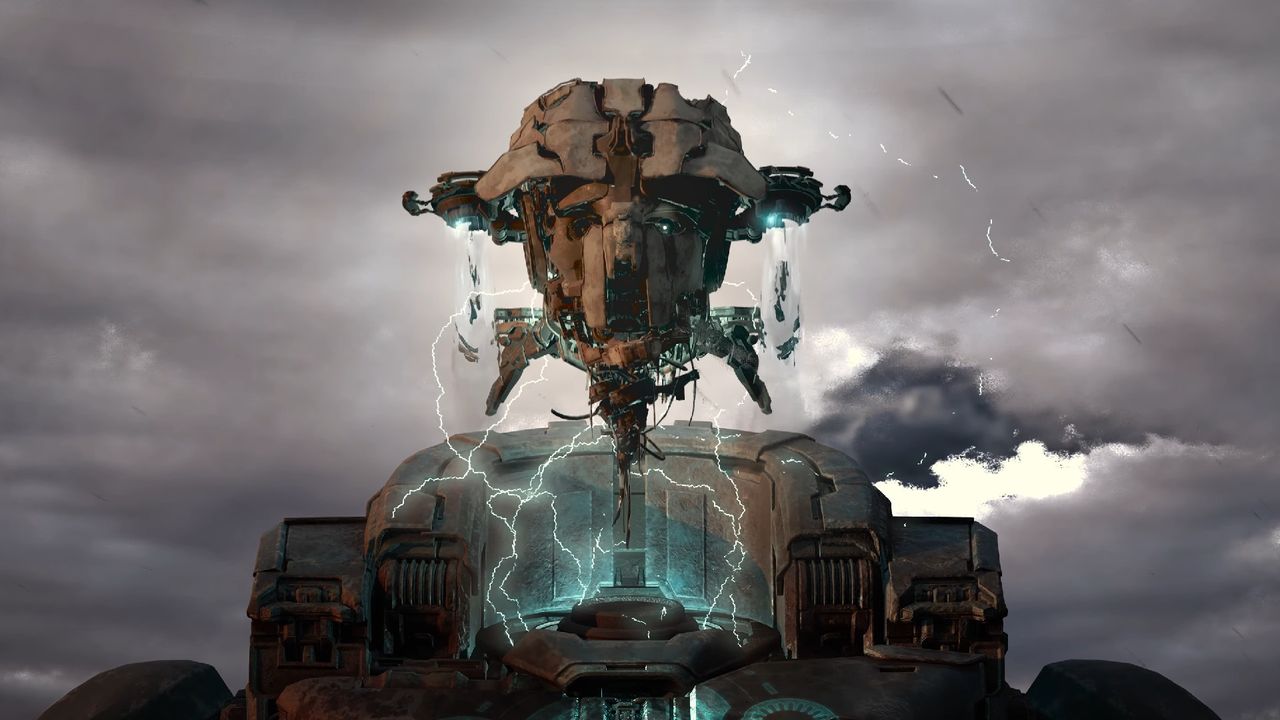
Friends, it is almost time to be very, very sad because a massive metal man fell over and died. Ico and Shadow of the Colossus creator Fumito Ueda has dropped the first proper footage of his forthcoming mech game project, announced back in 2024 with the codename Project Robot. The official title is Gen Atlas.
Ueda and development studio genDESIGN have also shared details of the game's plot and setting. It's described as "a single-player, open-world action-adventure game", and takes place on an abandoned, "living" planet full of derelict machines.
After a multi-year wait, we've finally gotten a proper look at the next game from Fumito Ueda, the celebrated director behind Ico, Shadow of the Colossus, and The Last Guardian. True to Ueda's past work, the trailer shows us a lone playable character in a desolate world backed up by a peculiar companion. In this case, that companion is a giant robot.
Personally? I'm sold by the mech fights alone, but the promise of another immersive story that'll have me emotionally wrecked by the end makes it all the sweeter.
You can check out the trailer in full below.
One thing's notably different from Ueda's previous games, however, as this one's not exclusive to PlayStation. Gen Atlas will come to PS5, of course, but it'll also be available on Xbox Series X/S and PC.
This game actually debuted back at The Game Awards in 2024, where it was revealed in partnership with Epic Games Publishing. Epic is still credited as publisher now that the game has a proper title, so while that probably explains the multiplatform launch, I wouldn't hold my breath on it coming to Steam.
Ueda led some of the most notable games of the PS2, with Ico and Shadow of the Colossus regularly cited as among the very best games ever made. The Last Guardian launched after a decade-long wait to general acclaim, though certainly less than its predecessors.
Gen Atlas's eventual launch will mark another decade-long wait for Ueda fans, but with so few games coming even close to his trademark style, that wait is certainly looking worthwhile.
Alien: Isolation 2 received a freaky new Summer Game Fest 2026 trailer with enough rows of marbled Xenomorph teeth to fill each of the 12 years since Creative Assembly's last survival horror game.
The sequel to the heart-thumping, claustrophobic classic Alien: Isolation is currently available to wishlist, and it'll eventually arrive on Xbox, PS5, Nintendo Switch 2, and PC via Steam. Watch the full trailer below.
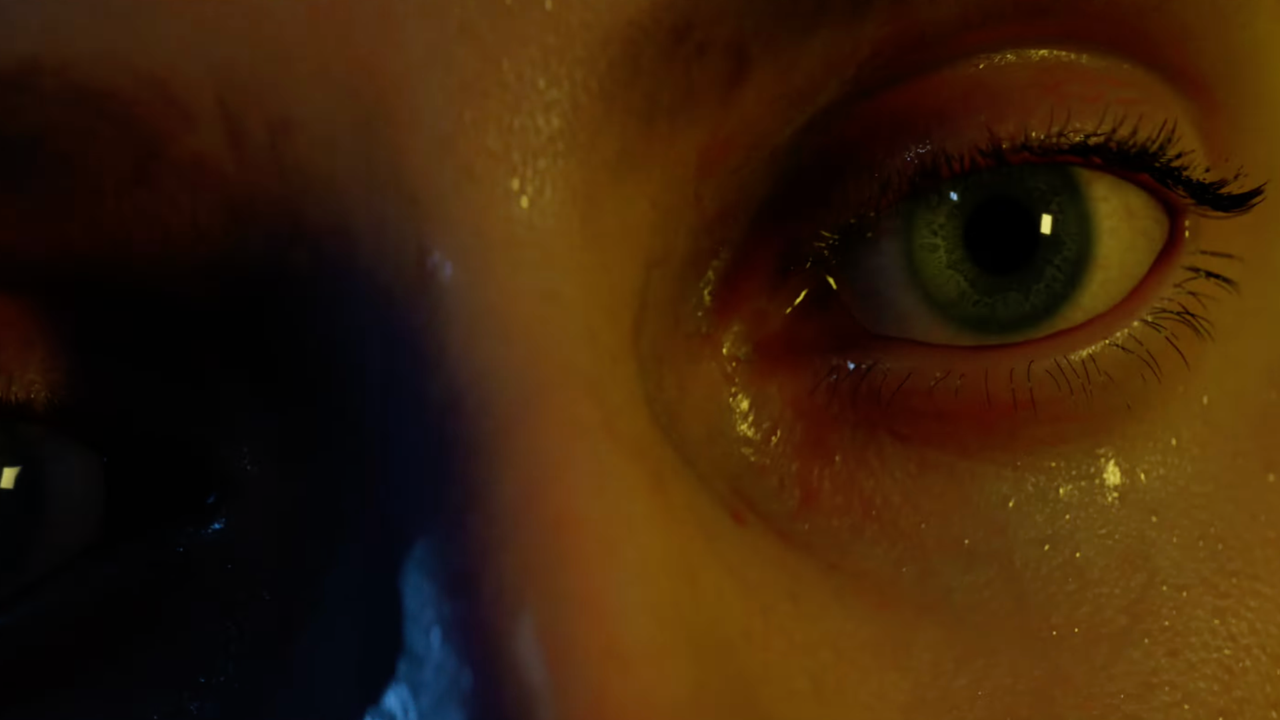
The pre-alpha footage shown in Alien: Isolation 2's new trailer is soaked in shades of slate gray, dusk blue, and the mandatory, black, nighttime sparkle of a Xenomorph's perverse flesh. A narrator refers to an "expensive" mistake as we're shown a dismal slideshow: chopped, knobby trees eaten by mist, the twisted intestines of a ruined spaceship, and someone's sweating face as their wide eyes seem to scream.
Alien: Isolation 2 apparently follows the original in offering first-person gameplay to make you extra anxious, and its new trailer teases the emergency flares, environmental puzzles, and monsters you can expect while bearing the consequences of your so-called mistake.
That brings us to the trailer's apex, one of the apex predators of horror history – the salivating Xenomorph. The Summer Game Fest trailer gives us just a glimpse at the protective mother, but the glimmer of its teeth burn a deep and horrific impression.
Even better, art director Ana Sopikova describes the creature as an "unkillable, relentless alien," and it'll skulk around the "unsuspecting colony world" Kurosaki Station, which you're tasked with escaping.
"Players will face a desperate struggle to survive," she says cheerfully, "and we cannot wait to show you more."
Capcom announced Monster Hunter Wilds Ascendance at tonight's Summer Game Fest live showcase, finally revealing the Iceborne-sized expansion that fans have been waiting for.
Monster Hunter Wilds Ascendance will arrive in 2027. The "massive expansion" will introduce multiple new monsters, give our weapons some new tricks, and seemingly bring back an Elder Dragon first seen all the way back in the original Monster Hunter: Lao-Shan Lung. Oh, and Kushala Daora is back too. Yay?
For all intents and purposes, this expansion ought to be the second half of the game. The Ascendance reveal trailer shows a new environment of floating islands, and features several special attacks seemingly tied to a new hunting gadget – a flaming gauntlet of sorts.
If you watch the latest Control Resonant gameplay footage, you'll see a game that takes the fascinating supernatural world of Control and melds it with the exhilarating and fast-paced melee combat of a character-action game. It's new territory for Remedy Entertainment, a studio that has primarily made games where protagonists shoot guns, but that genre experience wasn't evident in what I played. The combat felt satisfying and weighty, and the dynamic between unique weapons and powers created a thrilling gameplay loop.
What you probably won't get a good grasp of, however, is that the man crushing monsters with a hammer, telekinetically launching a barrage of rocks, and delivering bone-shattering flame punches is the victim of years of mental torture, captivity, and, in many ways, abuse. In dispatching The Hiss, Dylan Faden is undoubtedly superhuman, but in facing the world outside The Oldest House, he is a fragile man robbed of normality, uneasy in his newfound freedom, and in search of redemption.
That shift towards themes of loneliness and pain was always the plan, according to director Mikael Kasurinen. Control was envisioned as a story of two siblings on two extremely different roads through life. While Jesse Faden connects with the supernatural on her own terms, going on to find her way to The Oldest House and become Director of The Federal Bureau of Control, Dylan Faden was stolen away, imprisoned, and forced to use his powers by scientists trying to forge him into a candidate for the role of Director.
Dylan is not the typical hero in the way that Jesse was. His backstory is the quintessential setup for a villain, and that is what makes him such a fascinating character in Control Resonant. Through Jesse, we got to see how a mostly ordinary person deals with the extraordinary. But through Dylan, Remedy also wants to explore the ordinary through the eyes of someone extraordinary.
This is presented as a focal point from the outset, when Dylan wakes to find that The Oldest House has been overrun and he needs to deal with the weirdness that awaits. He battles his way out with ease but hesitates before stepping out onto the streets of Manhattan. Dylan Faden hasn't seen daylight in many years, so to him, it is much stranger than a fridge you can't look away from or a floppy disc that gives you the ability to fly.
"That idea of discovering what his humanity is was really appealing to me because Jesse was strong and then had to figure out her purpose," explained Sean Durrie, the actor for Dylan. "He thought he had a purpose but needs to find his strength. And so that journey of becoming someone who was trying to atone for his past to become helpful, to become a hero in a way, was a thrilling kind of thing to tackle."
Kasurinen added: "I think it makes him more interesting because he's not that typical confident hero who knows exactly what to do and how to do it and just starts doing it. He hesitates. There's a lot of things coming at him. He's trying to figure out what's the right part for him and he is facing these different situations. What he does know is he wants to help. That's his core belief. But then how to navigate that strange situation they've been thrown into is what defines them. And I like that about Dylan. He's not your typical hero.
"Jesse comes from this world. She's like us, she steps into the paranatural strange reality and learns about it together with the player. We never really saw New York in the first game. We leave it behind right away; it's behind the glass wall. You can never go to that place in the first game.
"In this game we go towards [it], we step onto those streets and [embrace] Dylan being an outsider [to Manhattan], like Jesse was an outsider to the Oldest House. What's normal to us is strange to him and we use that a lot, how Dylan approaches certain situations. He might be totally unafraid of certain things that are horrific to us, but then when he finds a detail that is somewhat interesting to him. He can be mesmerized by that and excited about that while others are like, 'Well, that's graffiti, man. They're all over the place.'"
The atypical, outsider nature of Dylan is very disarming when you remember that, in the first game, he is characterized as a dangerous weapon that needs to be contained--a nuclear bomb in a box. As players, we learn that there were incidents where Dylan lost control of himself and killed others. But when we meet him in Resonant, he is meek, unsure, and almost childlike, which presents some interesting challenges from both a narrative and gameplay perspective.
"I do think there's strength in the idea that you have this sense of connection to a character who might have uncertainty about their purpose in life," said Kasurinen. "But Dylan is still, at the end of the day, unafraid of facing these things and ready to deal with them. That's something that you can immediately connect with. The worst nightmare for him is that he would become a monster that is a danger to others, but as long as he can help, you see that [better] side of him right away. I think you can project that power fantasy through that lens, right? Like, 'I'm going to help. I'm going to deal with these different threats,"
"From a performer's perspective, I did a lot of research into how humans respond to trauma and how that manifests as they get older too," explained Duffie. "What I learned is that it can revert you to younger ages even as you get older.
"It was really important for me not to dwell in it within the character because you don't want to wallow in it so to speak, but that's where that innocence comes from, because he was a victim of very awful treatment that colors the rest of his life. But now we are getting through that and so as he progresses and faces his demons, how does that change him?"
One of the more interesting meta-layers that is created by having Dylan take the starring role comes from the relationship that players have with Jesse. She is someone that we've grown attached to and, by switching to Dylan, Remedy is putting him in the shadow of his sister both in-game and outside it. That feeds into what he does and how he behaves.
As players, we go through the process of building closeness with Dylan by exploring this topsy-turvy version of Manhattan, where a spiral of glitching pigeons corkscrew across the sky above the city, people are eerily suspended in the air, and buildings defy physics in increasingly baffling ways. We find the people in need and help them to complete tasks that will either secure their personal safety or contribute to the bigger task of saving reality as we know it.
But while doing this, there's a desperation in the way he volunteers himself for dangerous missions. It's not just that he wants to help because he can; it's also because he needs to help because he has to. Durrie's delivery of lines has the air of a kid trying to prove he can hang with the cool kids, but in this case it's Dylan trying to show people that he's not the monster people think he is. And he can do for them what Jesse did to become understood and accepted.
"There's an interesting meta layer there. When the player starts to play the game, they're asking, 'Where's Jesse?' And Dylan is asking the same thing. You're looking for that hero in this world. And that's what Dylan is doing as well. That's what he needs to face, being able to step up in that kind of a way.
"There's going to be a long road for him before he can see himself in that kind of a light. So the game starts from that kind of a place. Dylan asks, 'Where's the real hero because I'm not the one. I can help with things in the meanwhile, I do what I can, but Jesse is the one who's going to save the day.'"
That self-belief and inability to see himself as the hero of his own story is a key part of Control's narrative and what helps ground it as the world around it plunges deeper into weirder and weirder territory; places where Dylan is forced to apprehend things that aren't all that different from what he sees himself as.
"So there is that interesting dynamic there that how does he even feel when he's hunting these beings down because in a way he's seeing himself in those creatures," said Kasurinen. "It makes you pause and think about this. This is not the game where it's just senselessly, 'Go kill beings until you're done and the world is now saved.' It's much more complicated than that. I think that complexity, that's what's appealing about it; that there are a multitude of layers on top of it."
That nuance came into play after defeating a giant floating head that launched objects in hopes of crushing me. Once I managed to bring it down, Dylan began to execute it by plunging a weapon into its eye. Before doing it again in the other eye, there's a moment of apprehension, as Dylan realizes that he shares more in common with the monster he's fighting than the people he's fighting them for.
"The definition of a monster to Dylan is not black and white," added Durrie. "It's pretty gray because he knows what it's like for someone else to say he's a monster. He's fighting these monsters and he's like, 'Were you ever something else? Does something make you like this?'"
https://www.youtube.com/watch?v=oFmz2jV7Zkw
"You see two sides of Dylan there," said Kasurinen. "One is that weapon going and doing [his job], and then there's this brief moment where he sees another human being in a way that makes him stop. The point is that he needs to understand himself. We are going to learn a lot about what happened in the past."
The demons he's fighting and the frequency with which they come up in Dylan's story inevitably leads the player to think about the people that made him this way, which is where Remedy has the most opportunities to subvert the world of Control in a way that affects the player personally.
Early on, there's a live-action sequence in which Dr. Casper Darling, an incredibly charming and quirky mad-scientist-type character who players grew to love in the first game, records his reaction to discovering Dylan. He excitedly reveals a plan to bring him to The Oldest House and shape him into a Director candidate. Once the elation of seeing Dr. Darling making his return passes, you're left with a man essentially telling the player he's going to kidnap a child.
That's when the player is forced to grapple with the prospect of Control Resonant being a game where the people they have grown fond of in the first game are forced to reckon with the monsters they've created, and think about what consequences they should face.
https://www.youtube.com/watch?v=YJsXZhSsaUk
"We're going to open that up a lot in the story. What happened? What was going on with Dr. Darling and so on. I think people see [Darling] as almost like a goofy, fun, lovable character, but sometimes these characters have good intentions and want to achieve something that makes total sense to them, but the means that they take sometimes can be questionable. Dylan definitely was in the middle of all of that."
Control Resonant feels like it is poised to be a much more personal story than its predecessor. With the foundation of its paranatural world laid and explored through Jesse, the objective seems to now be to narrow its focus to what that world has done to Dylan and who did it. That's not to say that the worldbuilding that players love and are eagerly looking for more of isn't there--it definitely is.
https://www.youtube.com/watch?v=wdK-tITK5x8
"We want that world to be there. And it is. It has a range of world quests and side stories and obviously power and altered items. You can discover all of that cool stuff as you explore the world. As you go and deal with all of that stuff within this open world, you can choose how you want to go through it, you will have a moment where the story touches upon something like Dylan's situation and where to connect and then so on. And as he's confronted by these challenges and things that define him,.
"To me it was more important that it's not like a tourist simulator or anything like that, 'Hey, we're in Manhattan, we're going to go outside, see different locations and have this feeling of almost a gimmicky type of a thing. Instead, [Manhattan is] like a canvas. And it's all about the story of what you see contained and embedded inside all the stuff, the strange paranatural forces that just blew up over Manhattan, layered on top of these different zones. And yeah, we're unafraid of just honestly messing up the city in a radical way and having to unfold on itself and so on. And that's what makes it fun and interesting as a world."
Objects of power and altered world events will undoubtedly be a critical part of Control Resonant, but given what its protagonist has endured and the responsibility others have in his suffering, these things might not be what you leave the game thinking about. Like Manhattan overrun by The Hiss, Dylan Faden may turn your perspective on the world of Control upside down.
 Log in